Where to Go for Family Safari Experiences in Uganda?
September 1, 2026
Best Places for Walking Safaris in Uganda
September 1, 2026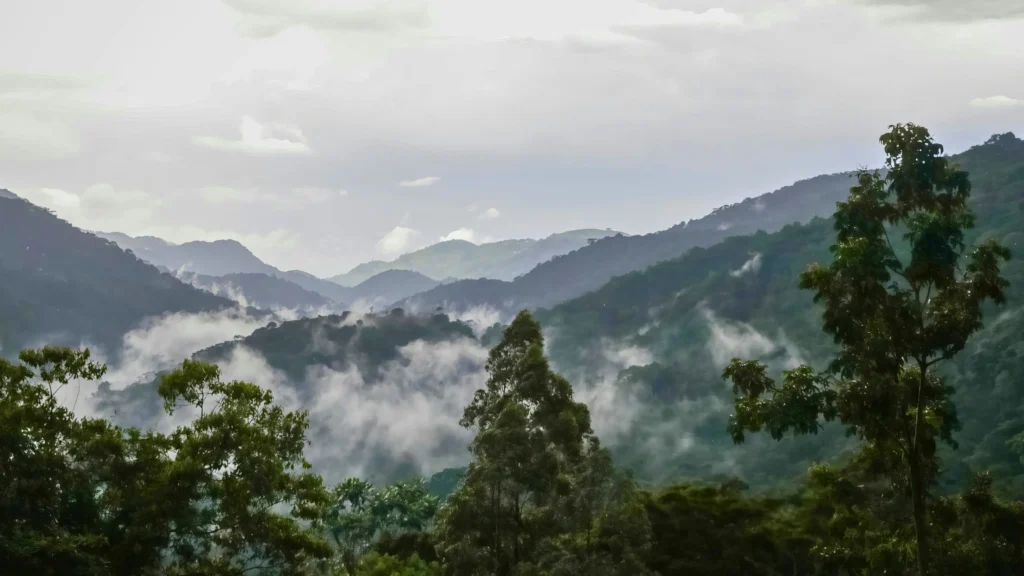
Ultimate Guide to Bwindi Impenetrable Forest National Park 2027; Bwindi Impenetrable National Park is, without real competition, Uganda’s single most important protected area, both for conservation and for tourism. Spanning roughly 32,000 hectares in the country’s remote southwest, at the junction of plain and mountain forest ecosystems, Bwindi holds the highest tree species diversity of any forest in East Africa, one of the most important butterfly habitats on the continent, and, most famously, close to half the entire world population of critically endangered mountain gorillas.
As a travel consultant, I find that many first-time visitors arrive at Bwindi expecting a straightforward wildlife park and leave having encountered something considerably more profound, a genuinely ancient forest ecosystem, a landscape that survived the last Ice Age as a refugium when surrounding areas grew too cold and dry, and an encounter with wild gorillas that reliably ranks among the most emotionally significant experiences of an entire safari trip.
A Forest With a Genuinely Ancient History
Bwindi’s name, meaning “impenetrable” or “dark place” in the local language, reflects the forest’s genuinely dense, tangled vegetation, a reasonable description of terrain that has remained largely undisturbed for millennia. The park’s ancient, unbroken geological character, surviving the last Ice Age as surrounding regions became too cold and dry to sustain forest, is precisely why it now harbours more tree species, fern species, and primate species than almost any comparable stretch of African forest.
Formal protection began in 1932, when parts of the forest were first designated as crown reserves, before being renamed the Impenetrable Central Forest Reserve in 1964, specifically to offer protection to the mountain gorillas already known to inhabit the area.
The forest was established as a national park in its own right in 1991 under Uganda’s National Parks Act, and UNESCO inscribed it as a World Heritage Site in 1994, recognising both its outstanding ecological diversity and its critical importance to global mountain gorilla conservation.
Extraordinary Biodiversity Beyond the Gorillas
Bwindi’s ecological credentials are genuinely remarkable independent of its famous primates. The park holds over 200 tree species, including ten found nowhere else on earth, and roughly 104 fern species, the highest diversity of both anywhere in East Africa.
It’s widely considered the most important forest in Africa for montane forest butterflies, with 202 recorded species representing 84 percent of Uganda’s entire butterfly count, including eight species found only within the Albertine Rift ecosystem.
The park’s bird list runs to roughly 350 to 360 species, 23 of them endemic to the Albertine Rift and 14 recorded nowhere else in Uganda, including the white-tailed blue flycatcher, the brown-necked parrot, and Fraser’s eagle owl.
Bwindi’s mammal count reaches around 120 species, including forest elephant, chimpanzee, L’Hoest’s monkey, red-tailed monkey, black-and-white colobus, yellow-backed duiker, and side-striped jackal, alongside golden cat and clawless otter for the genuinely fortunate observer.
The Mountain Gorillas: Bwindi’s Defining Feature
Bwindi is currently home to an estimated 459 mountain gorillas, representing roughly half of the world’s total population of just over 1,000 individuals, spread across more than 22 habituated families, with the exact number growing periodically as the Uganda Wildlife Authority continues its habituation programme.
This population, together with Rwanda’s Volcanoes National Park and the shared Virunga massif spanning into the Democratic Republic of Congo, represents the entire remaining range of this critically endangered subspecies anywhere on earth.
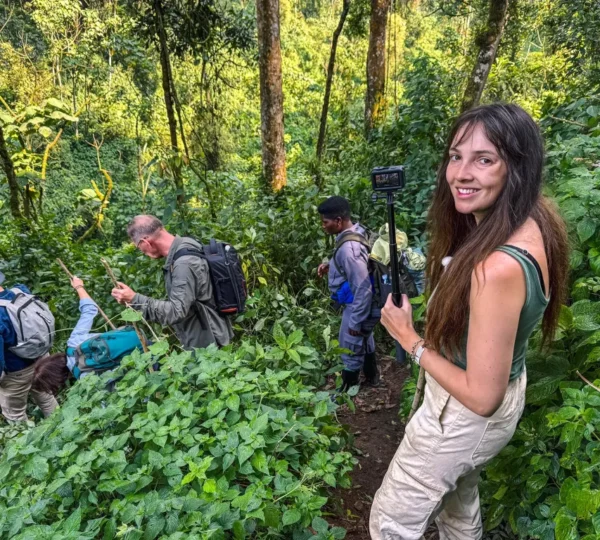
Gorilla Trekking in Bwindi
The gorillas’ recovery from critically low numbers decades ago owes a great deal to increased international attention following Dian Fossey’s influential book Gorillas in the Mist, attention that directly contributed to Bwindi’s UNESCO designation and the conservation funding that followed. Income generated directly from gorilla trekking permits has since become a crucial, ongoing funding source for the park’s protection measures, meaning tourism here plays a genuinely direct role in the species’ continued survival rather than being incidental to it.
The Four Trekking Sectors
Bwindi is divided into four distinct trekking sectors, each with its own entrance gate and its own set of habituated gorilla families, and understanding the difference matters for planning. Buhoma, on the park’s northern border, is the original and most established sector, home to the park headquarters and generally the most developed tourism infrastructure. Ruhija, in the southeast, sits near the Mubwindi Swamp, the largest mountain swamp in East Africa, and offers particularly strong birding alongside gorilla trekking.
Rushaga, in the south, holds the greatest concentration of habituated families and is the primary sector for the longer gorilla habituation experience. Nkuringo, also in the south, offers a genuinely more physically demanding trekking terrain but rewards visitors with dramatic views over the Virunga volcanoes on a clear day.
Because it can take hours to drive between sectors given Bwindi’s rugged, mountainous terrain, it’s essential to confirm which specific sector your gorilla permit is assigned to and choose lodge accommodation accordingly, rather than assuming any Bwindi-area lodge offers convenient access to all four sectors equally.
Gorilla Trekking: What to Expect
A gorilla trekking day begins with an early breakfast and a briefing at your designated sector’s headquarters, typically starting around 7 to 8am, where you’ll be organised into a group of up to eight trekkers and assigned to a specific habituated family.
The trek itself can last anywhere from thirty minutes to six hours or more, depending entirely on where that particular family happens to be located that day, through genuinely dense, often steep and muddy forest terrain that demands real physical effort and a reasonable baseline fitness level.
Once your group locates the gorillas, park rules permit exactly one hour in their company, observing feeding, grooming, play, and the family’s general social dynamics from a respectful, ranger-enforced distance. Gorilla trekking permits currently cost $700 per person, a fee that functions as your entry ticket into the forest and directly funds the park’s ongoing conservation work.
Beyond Gorilla Trekking
While gorilla trekking remains Bwindi’s primary draw, the park offers a genuinely broader range of activities worth building into a longer stay. The mountain gorilla habituation experience, available in the Rushaga sector, offers an extended, several-hour encounter with a gorilla family still in the process of becoming accustomed to human presence, a considerably longer and more research-focused experience than the standard one-hour trek.
Birdwatching, particularly strong around the Ruhija sector’s Mubwindi Swamp, guided nature walks and hikes through the forest’s varied trail network, mountain biking on select routes, and Batwa cultural experiences, offering genuine insight into the indigenous forest community historically displaced when the park was established, all add meaningful depth to a Bwindi visit beyond the gorillas alone.
Best Time to Visit
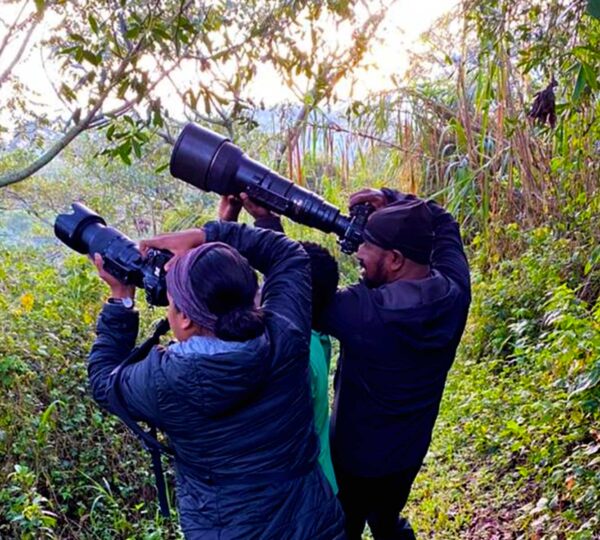
Photography safaris in Bwindi
Bwindi can genuinely be visited year-round, since gorilla trekking happens daily regardless of season given the habituated families’ consistent presence in the forest. That said, the dry seasons, roughly June through September and December through February, offer firmer, considerably more manageable trekking conditions across Bwindi’s genuinely steep and often muddy terrain, while the wetter months bring lush, dramatically green scenery and meaningfully lower rates at many lodges, in exchange for more physically demanding trekking underfoot.
Frequently Asked Questions
How many gorillas live in Bwindi Impenetrable National Park?
Approximately 459 mountain gorillas, representing roughly half the world’s total population of just over 1,000, spread across more than 22 habituated families.
How much does gorilla trekking cost in Bwindi?
Gorilla trekking permits currently cost $700 per person, serving as your entry ticket into the forest and directly funding the park’s ongoing conservation and community programs.
Which of Bwindi’s four sectors should I choose?
It depends on which permit you’re assigned and your priorities: Buhoma offers the most established infrastructure, Ruhija the strongest birding, Rushaga the greatest concentration of families and the habituation experience, and Nkuringo the most dramatic scenery paired with more demanding terrain.
How physically demanding is gorilla trekking in Bwindi?
Genuinely demanding. Treks can last from thirty minutes to six hours or more through steep, often muddy forest terrain, and a reasonable baseline fitness level is recommended for all trekkers.
When is the best time to visit Bwindi?
The park can be visited year-round given gorilla trekking’s daily availability, though the dry seasons, June through September and December through February, offer firmer, more manageable trekking conditions.