Best Family-Friendly Safaris Packages in Uganda
September 1, 2026
Guide to Bwindi Impenetrable Forest National Park 2027
September 1, 2026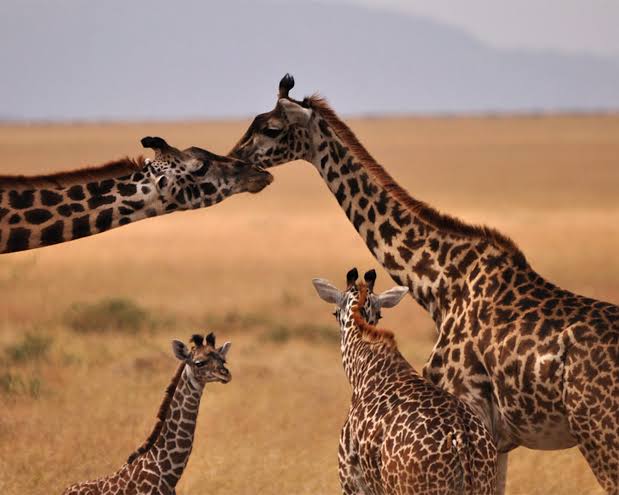
Where to Go for Family Safari Experiences in Uganda? Uganda is a genuinely wonderful family safari destination, but it demands more deliberate planning than a straightforward adult-only trip, chiefly because of a single, non-negotiable rule: the minimum age for mountain gorilla trekking is 15 years old across Uganda, Rwanda, and the Democratic Republic of Congo, enforced strictly by park authorities and verified by passport at the trekking briefing. That single fact shapes the entire structure of a family Uganda itinerary, but it doesn’t remotely rule out a spectacular family trip.
As a travel consultant, I find the families who enjoy Uganda most are the ones who plan around the age restriction proactively rather than treating it as a disappointment to work around. This guide covers where to go, which activities suit which ages, and how to structure a Uganda itinerary that genuinely works for the youngest and oldest members of your travel party alike.
Understanding the Age Rules Before You Plan Anything Else
Mountain gorilla trekking in both Bwindi Impenetrable National Park and Mgahinga Gorilla National Park requires travelers to be 15 years old on the actual date of the trek, not the booking date, and this is enforced without exception by the Uganda Wildlife Authority regardless of a child’s physical fitness or maturity.
The restriction exists for two genuine reasons: younger children are statistically more likely to make unpredictable movements or sounds that could disturb a habituated gorilla family, and children carry a higher risk of transmitting respiratory infections to gorillas, whose genetic closeness to humans makes disease transmission a real conservation concern.
Chimpanzee trekking in Kibale National Park operates under a more flexible age policy, generally permitting travelers aged 12 and up, and golden monkey trekking in Mgahinga National Park, often available from age 12 as well depending on the specific lodge or operator, has no strict official minimum in the way gorilla trekking does.
This distinction matters enormously for family planning: families with teenagers aged 12 to 14 can still enjoy genuine primate encounters through chimpanzee and golden monkey trekking, reserving gorilla trekking itself for a return trip once everyone in the family clears the 15-year threshold.
Queen Elizabeth National Park:
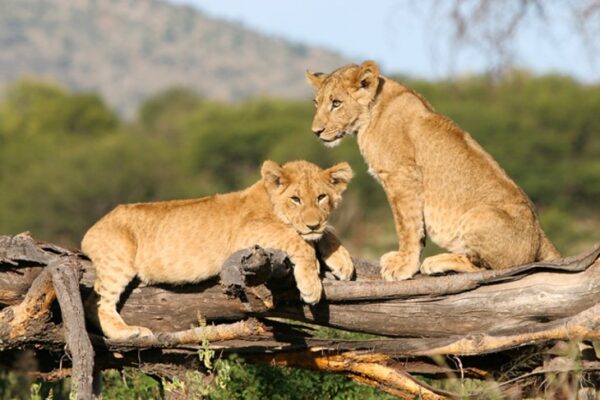
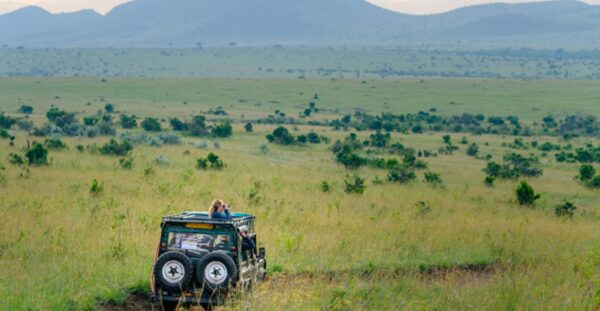
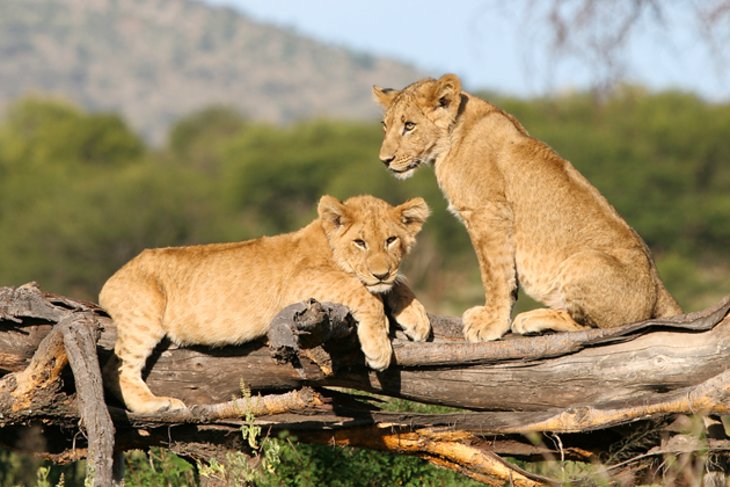
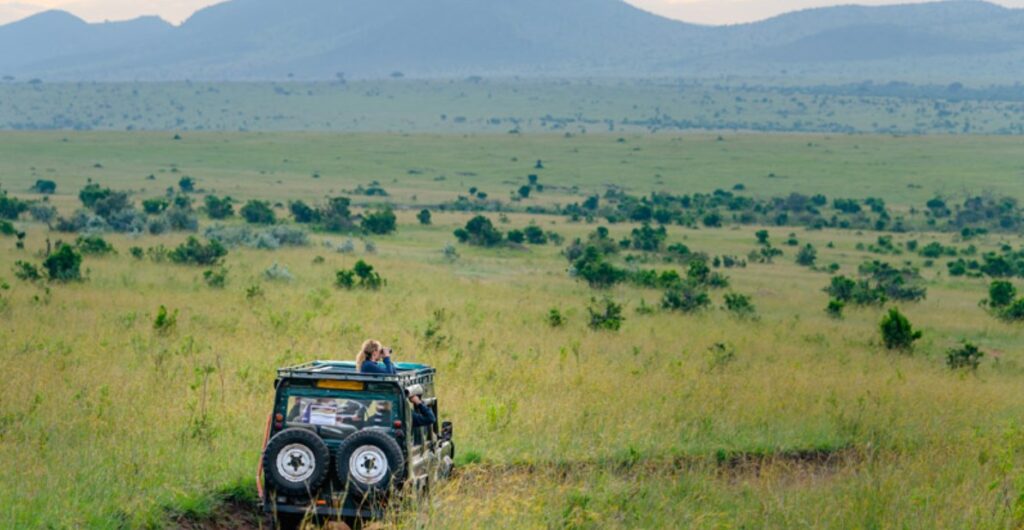
Queen Elizabeth National Park is generally the strongest single destination for a Uganda family safari, offering activities with no age restriction at all: classic vehicle-based game drives across genuinely productive savanna, home to elephant, buffalo, lion, and the famous tree-climbing lions of the Ishasha sector, alongside a boat cruise along the Kazinga Channel connecting Lake Edward and Lake George, one of the most reliable wildlife-viewing activities in the country given the sheer density of hippo, crocodile, elephant, and birdlife that gathers along its banks.
The boat cruise in particular tends to be a genuine highlight for younger children, since it requires no hiking or physical exertion while still delivering close, memorable wildlife encounters, and the park’s varied terrain and generally good road network make for a comfortable, flexible family itinerary without the physical demands that trekking-focused activities require.
Kibale National Park:
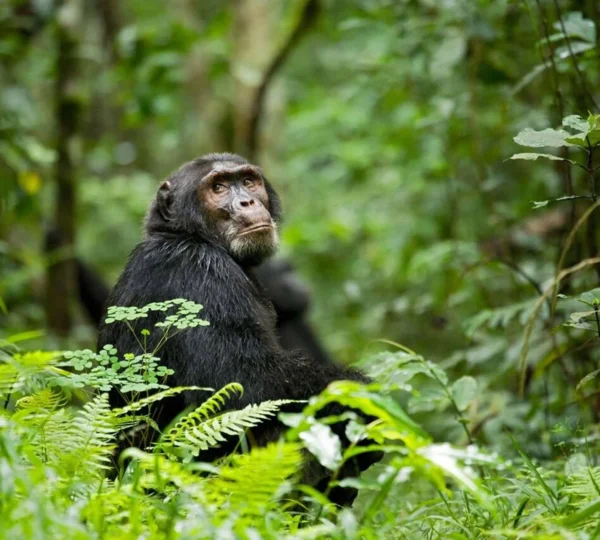
Chimpanzee
Kibale National Park, home to the largest habituated chimpanzee community in Uganda, offers the single best primate-focused activity for families with children too young for gorilla trekking. Chimp tracking here is a genuinely different experience from gorilla trekking, more dynamic and noisier, often involving looking up into a dense forest canopy rather than encountering animals at ground level, and it remains accessible to travelers as young as twelve at most operators, giving families with mixed-age children a genuine primate encounter everyone can share.
Beyond chimp tracking itself, Kibale’s adjacent Bigodi Wetland Sanctuary offers a gentler, considerably shorter guided walk well suited to younger children or family members who’d rather not commit to a full trekking day, with strong birdlife and a real chance of spotting several monkey species along the walk.
Mgahinga Gorilla National Park:
For families with children in the 12-to-14 age range specifically, Mgahinga offers golden monkey trekking as a genuinely rewarding alternative to gorilla trekking, with generally no strict minimum age requirement, considerably shorter and less physically intense hikes than most gorilla treks, and a genuinely playful, energetic species that children often connect with immediately as they move quickly through the park’s bamboo forest.
Mgahinga tends to receive less attention in mainstream Uganda safari marketing than Bwindi, which works in families’ favour, since it offers extraordinary Virunga volcano scenery and a considerably quieter, less crowded pace than the country’s more famous gorilla destination.
Bwindi Impenetrable National Park:
For families with a mix of eligible and ineligible trekkers, the honest, practical solution isn’t disappointment, it’s creative itinerary design. While the adults or older teenagers in the family conduct the gorilla trek itself, several lodges around Bwindi run genuine, well-organized childcare and activity programmes for younger family members, including guided nature walks, birdwatching, cycling, and other age-appropriate activities that keep children genuinely engaged rather than simply waiting at the lodge.
Lodges including Buhoma Lodge, Gorilla Forest Camp, and Sabyinyo Silverback Lodge specifically offer family rooms and structured children’s programmes, and booking through an operator experienced in family logistics means this split can be arranged smoothly rather than becoming a source of stress on trekking day.
Because only 160 gorilla permits are issued per day across Uganda’s various trekking sectors, and permit demand runs particularly high during peak season (June through September, December through February), booking six to twelve months ahead is genuinely important for family trips wanting to secure permits for the eligible members of the group.
Murchison Falls National Park:
Murchison Falls National Park’s sheer scale and variety, the Nile boat cruise, savanna game drives, and the dramatic hike to the top of the falls, make it another genuinely strong family destination with no age restrictions on any of its core activities. The boat cruise specifically offers the same low-exertion, high-reward wildlife viewing that makes Queen Elizabeth’s Kazinga Channel cruise so popular with families, and the open, spacious game-drive circuits give children plenty to look at without requiring the sustained physical stamina that trekking activities demand.
Ssese Islands and Post-Safari Relaxation
After the more activity-dense portions of a Uganda family safari, the Ssese Islands on Lake Victoria offer a genuinely relaxed, beach-style close to the trip, swimming, boat excursions, and a considerably slower pace that both children and adults tend to appreciate after several days of early-morning game drives and treks. For families wanting a beach extension without leaving East Africa entirely, Zanzibar in neighbouring Tanzania is also a commonly added extension for longer, multi-country family itineraries.
Matching Activities to Age Groups
| Age Group | Best-Suited Activities |
| Under 12 | Game drives, Kazinga Channel or Nile boat cruises, Bigodi wetland walk, cultural experiences |
| 12-14 | All of the above, plus chimpanzee trekking in Kibale and golden monkey trekking in Mgahinga |
| 15+ | All activities, including mountain gorilla trekking in Bwindi or Mgahinga |
| Mixed-age families | Split itineraries pairing gorilla trekking for eligible members with lodge-based children’s programmes for younger family members |
Practical Planning Notes for Families
Uganda’s road network between parks involves genuinely long drive days on some routes, so building in rest days or breaking up longer transfers with an overnight stop is worth discussing with your consultant specifically for family trips, since young children tolerate lengthy road travel considerably less well than adults. Domestic flights between key parks are increasingly used to shorten these transfers for families with the budget to prioritize time over cost.
Malaria prophylaxis, appropriate vaccinations, and travel insurance with medical evacuation coverage all deserve particular attention for family trips, and a travel clinic visit four to six weeks before departure allows time to work through pediatric-specific guidance for younger travelers. Finally, confirm minimum age policies directly with each specific lodge and activity provider before finalizing an itinerary, since golden monkey trekking and certain lodge activities can vary in their exact age policy from one operator to the next.
Choosing Family-Friendly Accommodation
Not every safari lodge in Uganda is genuinely set up for families, and it’s worth confirming specific family policies rather than assuming any luxury property will accommodate children comfortably. Look specifically for lodges offering interconnecting family rooms or dedicated family tents, rather than assuming a standard double room will be adapted on request, and ask directly about minimum age policies for game drives and other activities, since these can vary meaningfully between properties even within the same park.
Several of Uganda’s more established family-oriented lodges also run dedicated children’s activity programmes, nature-focused scavenger hunts, simple craft sessions, or junior ranger-style badges, that give children a genuine sense of ownership over the safari experience rather than simply tagging along on adult-paced activities. Asking your consultant specifically about family programming, rather than general luxury or comfort level alone, tends to produce a considerably better-matched shortlist of properties.
Pacing a Family Itinerary Correctly
The single most common mistake I see in family Uganda itineraries built independently, without a consultant’s input, is over-scheduling: trying to fit gorilla trekking, chimp trekking, multiple game parks, and a cultural day all into a single, tightly packed week. Children, and frankly most adults, do better with a slower rhythm that includes genuine rest days and half-day activity blocks rather than back-to-back full-day commitments across an entire trip.
I generally recommend a minimum of ten days for a proper multi-generational Uganda family safari, allowing enough time to properly experience two or three parks without the exhausting, rushed pace that a shorter trip covering the same ground would require. Building in at least one lower-key day, a relaxed morning at the lodge, a cultural village visit, or simply a slow, unhurried boat cruise, between more physically demanding activities keeps the whole family genuinely enjoying the trip rather than simply enduring it.
Frequently Asked Questions
Can children do gorilla trekking in Uganda?
No. The minimum age for gorilla trekking in Uganda, enforced by the Uganda Wildlife Authority, is 15 years old on the day of the trek, with no exceptions regardless of a child’s fitness or maturity.
What can younger children do instead of gorilla trekking?
Chimpanzee trekking in Kibale National Park (generally 12+), golden monkey trekking in Mgahinga (often no strict minimum age), classic game drives, and boat cruises on the Kazinga Channel or the Nile are all excellent, unrestricted alternatives suited to younger family members.
Can our family split up so some of us trek gorillas while others do something else?
Yes, and this is a common, well-supported arrangement. Several lodges around Bwindi offer structured childcare and activity programmes for younger family members while eligible trekkers conduct the gorilla trek, including guided walks, birdwatching, and cycling.
Which Uganda park is best for a family with young children?
Queen Elizabeth National Park and Murchison Falls National Park are generally the strongest choices, offering unrestricted game drives and boat cruises that deliver strong wildlife viewing without the physical demands of trekking.
How far in advance should we book a family gorilla trekking trip?
Six to twelve months ahead, particularly for peak season travel (June through September, December through February), given the limited number of daily gorilla permits issued across Uganda’s trekking sectors.