Tanzania Budget Safaris
October 16, 2026
Best Time To Visit Chyulu Hills Kenya
October 16, 2026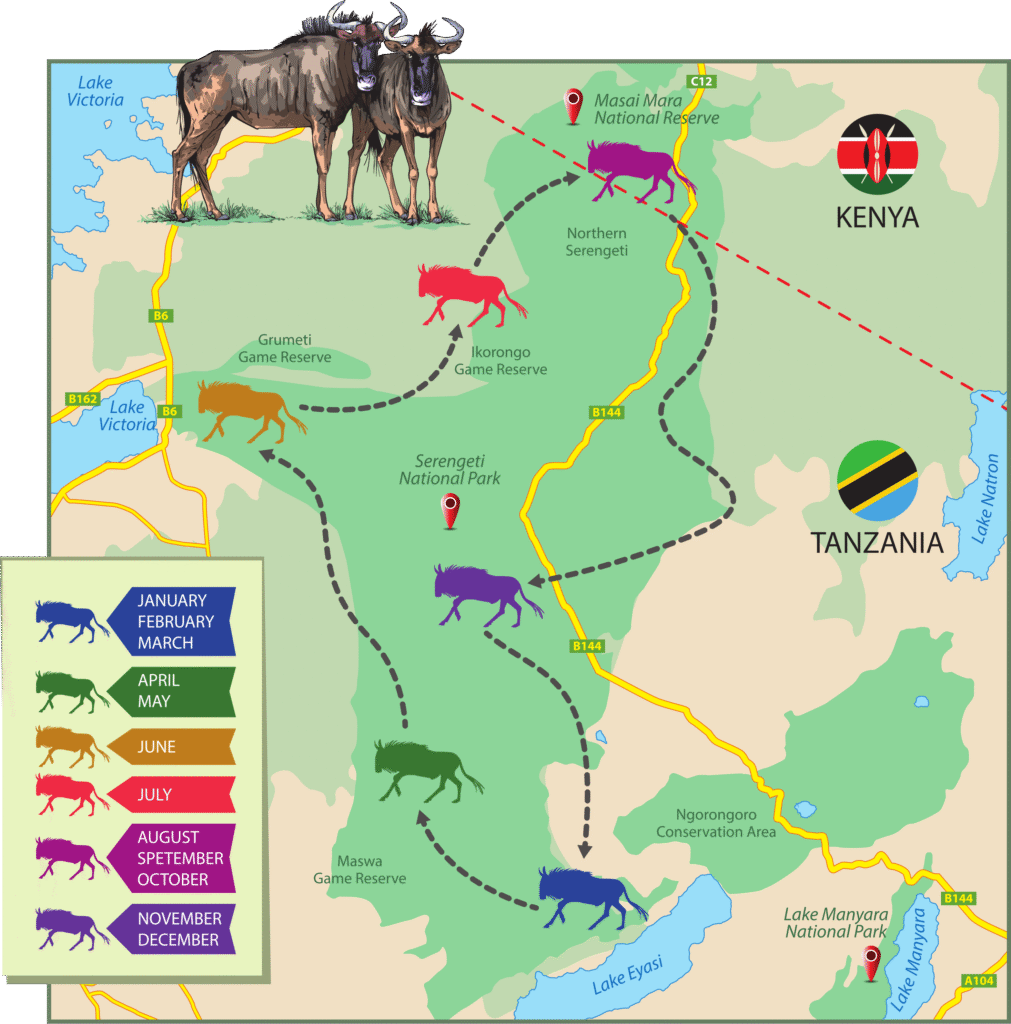
Serengeti Wildebeest Migration Month By Month Guide
This Serengeti wildebeest migration month by month guide explains where the herds usually are throughout the year, what you are likely to see, which areas to base yourself in and how to choose the right month for your priorities. It draws on many seasons of placing travellers in the right camps at the right time. The Great Migration is not an event that happens on a single day. It is a year long journey of roughly 1.5 million wildebeest, accompanied by several hundred thousand zebra and gazelle, moving in a broad clockwise loop through the Serengeti and into Kenya’s Maasai Mara. The herds follow rain and fresh grazing, and every stage of their journey offers something different: newborn calves in February, rutting bulls in May, chaotic river crossings in August.
That is exactly why timing and location matter so much. A traveller who books the northern Serengeti in February will see resident wildlife but few wildebeest. A traveller who books Ndutu in February may witness thousands of births a day. The difference is entirely down to planning.
The Migration at a Glance
| Month | Approximate Location | Key Activity | Recommended Base |
| January | Southern Serengeti, Ndutu | Herds grazing, calving begins late in the month | Ndutu, southern Serengeti |
| February | Southern Serengeti, Ndutu | Peak calving, predator action | Ndutu, Kusini |
| March | Southern and southwestern plains | Calves growing, herds begin moving | Ndutu, Moru, Seronera |
| April | Central and western Serengeti | Long rains, herds moving north | Seronera, Moru |
| May | Central to Western Corridor | Rutting season, long columns | Seronera, Western Corridor |
| June | Western Corridor, Grumeti River | Grumeti crossings possible, herds moving north | Western Corridor, Grumeti |
| July | Northern Serengeti and Mara | Mara River crossings begin | Kogatende, Lamai, Mara North |
| August | Northern Serengeti and Maasai Mara | Peak crossing activity | Kogatende, Lamai |
| September | Northern Serengeti and Maasai Mara | Continued crossings, herds spread | Kogatende, Lamai |
| October | Northern Serengeti, starting south | Return crossings, movement south | Kogatende, Lobo |
| November | Eastern and central Serengeti | Herds moving south with short rains | Lobo, Seronera, Namiri |
| December | Southern Serengeti arriving | Herds settling on short grass plains | Ndutu, Seronera south |
January:
By January, most of the herds have reached the short grass plains of the southern Serengeti and the Ndutu area of the Ngorongoro Conservation Area. These volcanic soils produce grasses rich in minerals, particularly phosphorus, which pregnant wildebeest need before giving birth.
What to Expect
The plains fill with grazing herds, and the first calves often appear in late January. Predators gather: lions, cheetahs, spotted hyenas and jackals move in to take advantage of the concentration. Light rains keep the landscape green, and the skies are often dramatic.
February:
February is one of the most remarkable months in the migration calendar. Over a few weeks, hundreds of thousands of wildebeest calves are born, with estimates often suggesting around 8,000 births per day at the peak. Calves can stand within minutes and run with the herd soon after.
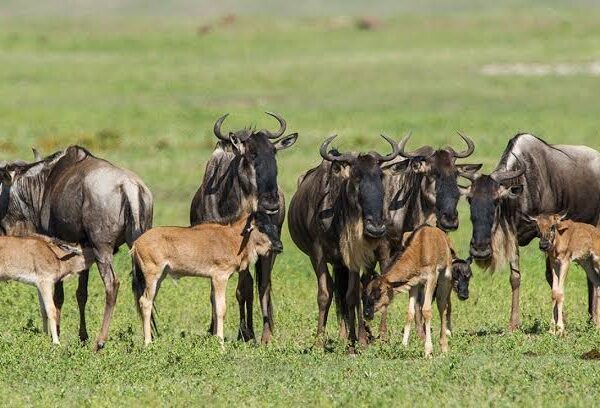
Wildebeest Calving
What to Expect
Predator activity is intense. Cheetahs hunt on the open plains, lions ambush near water, and hyena clans patrol the herds at night. For photographers and wildlife enthusiasts, February offers some of the most dramatic action of the year, without the river crossings.
Practical Considerations
Ndutu camps are in high demand, so book early. Off road driving is permitted in parts of the Ndutu area within the Ngorongoro Conservation Area, which allows closer viewing than in most of the Serengeti, under rules that change from time to time.
March:
In March, the calves are stronger and the herds remain largely in the south, though they begin to spread toward the southwestern plains and Moru Kopjes. Rains increase toward the end of the month.
What to Expect
Large herds with young calves, continued predator activity and green landscapes. Visitor numbers drop as the long rains approach, and some camps lower their rates.
April:
April is the wettest month in the Serengeti. The herds begin to move northwest through the central Serengeti, often in long columns. Some camps close, and roads can be challenging.
What to Expect
The landscape is lush and green, birdlife is excellent with migrant species present, and visitor numbers are at their lowest. Wildlife viewing remains good in the central Serengeti, though the herds are more dispersed and harder to predict.
May:
In May, the herds gather in large numbers in the central and western Serengeti, and the wildebeest rut takes place. Bulls compete for territory and females, creating noise, chasing and constant movement.
What to Expect
Long columns of wildebeest stretching across the plains, sometimes for many kilometres, are one of the most impressive sights of the migration. Rains begin to ease late in the month.
June:
In June, much of the migration moves through the Western Corridor toward the Grumeti River. The Grumeti is smaller than the Mara, but its large Nile crocodiles make crossings dramatic when they occur.
What to Expect
Herds massing in the western Serengeti, possible Grumeti River crossings and good general game viewing as the dry season begins. Some herds may start moving north by the end of the month.
July:
July marks the start of the most famous phase of the migration. Herds reach the northern Serengeti, and the first Mara River crossings typically occur, though the timing varies.
What to Expect
Crossings can be dramatic, with thousands of animals plunging into the river while crocodiles wait below. Crossings are unpredictable; herds may gather at the bank for hours and then turn away, or cross suddenly with little warning.
August:
August is usually the busiest crossing month. Herds move back and forth across the Mara River, sometimes several times, as they follow grazing between the northern Serengeti and Kenya’s Maasai Mara.
What to Expect
Multiple crossings on many days, strong predator activity and dry, clear weather. The northern Serengeti is quieter than the Maasai Mara, but popular crossing points can still draw many vehicles.
September:
In September, the herds remain in the northern Serengeti and Maasai Mara, and crossings continue. Visitor numbers begin to ease after the August peak.
What to Expect
Regular crossings, strong predator sightings and excellent dry season conditions. September is often considered one of the best months for a balance of crossings and fewer crowds.
October:
In October, the herds begin to move south as the short rains approach. Return crossings of the Mara River are possible, and the herds pass through the Lobo area in the northeastern Serengeti.
What to Expect
Movement and change. Some herds remain in the north early in the month, while others head south. Wildlife viewing remains strong, and prices begin to fall toward the end of the month.
November:
With the short rains, the herds move quickly south through the eastern Serengeti and Lobo area toward the central and southern plains.
What to Expect
Herds on the move, green landscapes and fewer visitors. Short rains usually fall as afternoon showers rather than all day rain.
December:
By December, the herds are arriving on the southern plains, completing the loop. Grazing is plentiful, and the stage is set for calving.
What to Expect
Large herds settling in the south, good general game viewing and the festive season. Prices rise sharply over Christmas and New Year.
Choosing the Right Month for You
| Priority | Best Months | Best Area |
| Calving and predator action | Late January to March | Ndutu and southern Serengeti |
| Mara River crossings | July to October | Northern Serengeti, Kogatende and Lamai |
| Grumeti River crossings | June | Western Corridor |
| Fewer crowds and lower prices | April, May, November | Central Serengeti |
| Herds in long columns | May to June | Central and western Serengeti |
| Combining with Zanzibar | January to February, June to October | Any |
Serengeti or Maasai Mara: Which Side of the Border?
The migration ecosystem spans two countries, and travellers often ask whether to watch the herds from Tanzania or Kenya. Both are excellent, and the right choice depends on timing and priorities.
The Serengeti hosts the herds for roughly nine months of the year, including the calving season, the rut and the Grumeti crossings. The Maasai Mara receives the herds mainly from about July to October, when they graze the Mara plains and cross the Mara and Talek rivers.
During the crossing season, the northern Serengeti tends to feel more remote and is usually reached by light aircraft, which keeps vehicle numbers lower at many crossing points. The Maasai Mara is more accessible and has a wider range of accommodation, including private conservancies with limited vehicle numbers, off road driving and night drives, although popular crossing points in the main reserve can become busy.
For travellers with ten days or more between July and October, combining both is a strong option: three or four nights in the northern Serengeti followed by a short flight via Arusha or a border routing to the Maasai Mara.
What a Migration Day Looks Like
A typical day following the herds starts before sunrise with coffee by the fire and a departure at first light. In the calving season, guides head straight for the plains to look for births and the predators shadowing them. In the crossing season, guides scan known crossing points and watch for herds building on the riverbanks.
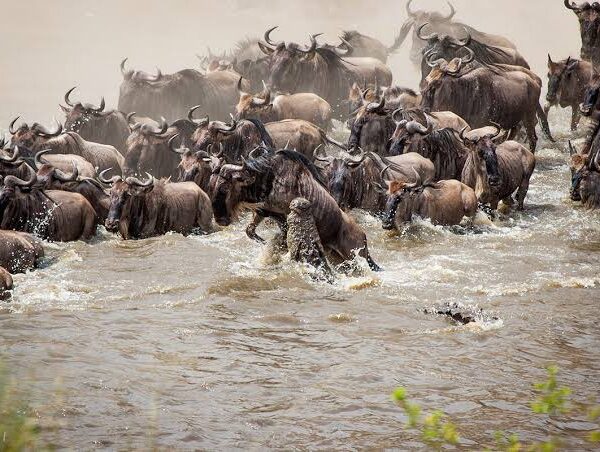
Migration
Patience is part of the experience. Herds may gather for hours before committing to a crossing, or turn back at the last moment. Many travellers take a packed breakfast and lunch so they can stay near the river without returning to camp. Afternoons in the calving season are often spent following cheetahs or lions as they hunt. Days end with sundowners on the plains and dinner under the stars, with hyenas calling in the distance.
Budget Considerations
| Season | Typical Cost Per Person Per Night (Mid Range) | Notes |
| Peak (July to October, Christmas) | US$600 to US$1,000+ | Northern camps book early |
| Calving (January to March) | US$500 to US$900 | Ndutu camps in high demand |
| Green season (April to May) | US$350 to US$600 | Some closures, best value |
| Short rains (November) | US$400 to US$700 | Good balance of price and viewing |