Where to Stay in Nyerere National Park
October 21, 2026
Tsavo East National Park Fees
October 30, 2026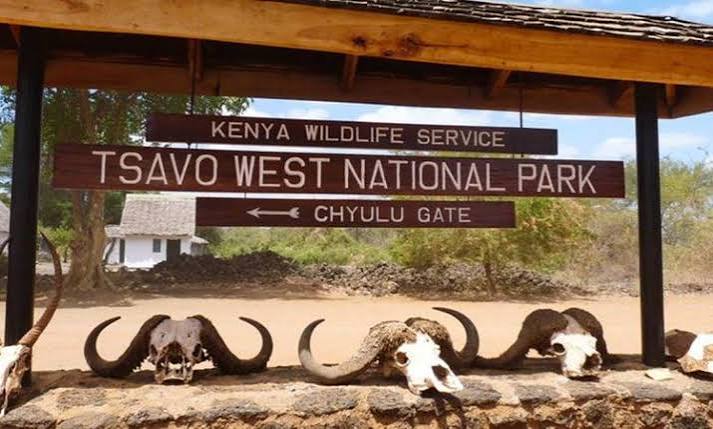
Tsavo West National Park Fees
Tsavo West National Park Fees : If Tsavo East is the park of wide plains, Tsavo West is the park of drama. Volcanic cones, black lava flows, crystal springs, rocky hills and a lake on the Tanzanian border give it a variety of scenery that the flat east cannot match. It covers about 9,065 square kilometres between Nairobi and Mombasa, with Kilimanjaro visible from parts of it on clear days, and it holds the Ngulia Rhino Sanctuary, one of Kenya’s best places to see black rhino.
Because it is both scenic and accessible from the Nairobi to Mombasa highway, Tsavo West is a popular add-on to coast holidays and a good stop between Amboseli and the beach. This guide covers the fees for 2026, how to pay, the gates, what the ticket includes, what to see and do, where to stay, how to get there and when to go.
Is Tsavo West Worth Visiting?
Yes, if you enjoy varied scenery and a more adventurous feel than the open savannahs. Tsavo West offers springs with underwater viewing, lava caves, a crater walk, rhino viewing in a sanctuary and lodges with long views. It suits photographers, geology enthusiasts, families who enjoy short walks and travellers who want a park that is not just about big herds.
It is less suited to travellers who want to tick off the Big Five quickly. Vegetation is thicker than in Amboseli or the Mara, so wildlife can be harder to see, and the park is large, so travel between attractions takes time. A good guide makes a significant difference.
Entry Fees
Tsavo West and Tsavo East share the same fee structure, set by the Kenya Wildlife Service under its wilderness park category. For non-residents, the fee is US$80 per adult and US$40 per child or student aged 3 to 17 per 24 hours, with children under 3 free in at least one source. East African citizens pay KES 1,000 for adults and KES 500 for children, Kenya residents KES 1,350 and KES 675, and other African citizens US$40 and US$20.
The fee is flat all year, with no high or low season. Each park has a separate entry, so visiting both Tsavo East and Tsavo West means paying twice, though a multi-park ticket appears in one source, so ask your operator. Several sources still show older figures, including US$52 for adults, and a few much lower numbers, which reflect earlier tariffs.
| Visitor Category | Adult (per 24 hrs) | Child (per 24 hrs) |
| East African citizen | KES 1,000 | KES 500 |
| Kenya resident | KES 1,350 | KES 675 |
| Other African citizen | US$40 | US$20 |
| Non-resident | US$80 | US$40 |
Vehicle, Camping and Activity Charges
A vehicle fee is charged on top of entry, with a 2026 guide giving KES 600 for a typical safari vehicle. Camping fees are separate, with public campsites at about US$20 per non-resident adult and US$15 per child, and special campsites at about US$35 and US$20. Public campsites in Tsavo West include Kamboyo near Mtito Andei Gate, Chyulu near Chyulu Gate and one on the shore of Lake Jipe, offering water and latrines only.
Some attractions are included in your entry fee, while others carry additional charges. The Ngulia Rhino Sanctuary has no extra fee beyond park entry, according to one 2026 guide, but access may need to be arranged. Guided cave trips at the Shetani lava flows may be arranged through lodges for about US$50 per person in one source, and special activities such as night drives need advance arrangement with KWS.
How to Pay
Payment is now online through the KWS eCitizen platform, often called KWSpay, using M-Pesa, Airtel Money or a card. A 2026 source says Tsavo West is cashless, and older descriptions of a SafariCard that could be loaded but not obtained at Mtito Andei Gate appear to reflect an earlier system. Pay before you arrive and keep your confirmation on your phone.
If you are travelling with a tour operator, they will usually pay and include the fees in your package, so check what is covered. Self-drive visitors should pay online in advance and make sure the confirmation covers each day of their stay, since fees are charged per 24 hours.
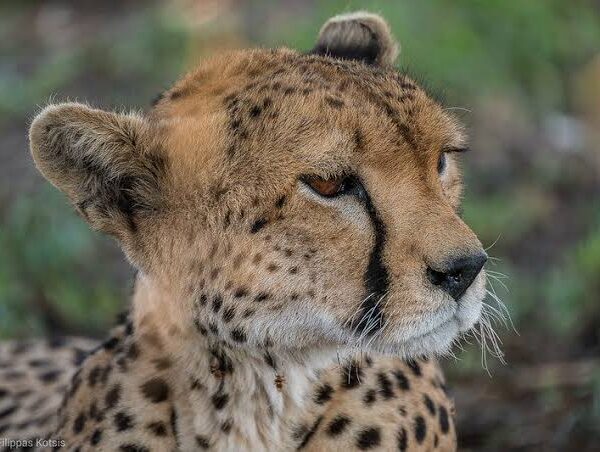
Leopard in Tsavo West national park
The Gates
KWS lists several gates for Tsavo West: Tsavo, Lake Jipe, Mtito Andei, Chyulu, Maktau and Ziwani. Mtito Andei Gate, on the Nairobi to Mombasa highway about 240 kilometres from Nairobi and 250 kilometres from Mombasa, is the most commonly used. Tsavo Gate, near Manyani, is used by visitors from Mombasa, Chyulu Gate is the main access from Amboseli and the Chyulu Hills, and Maktau and Lake Jipe serve the south-west near the Tanzanian border.
Choose the gate based on your camp and your direction of travel. If you are coming from Nairobi, Mtito Andei is usually the natural choice, and if you are arriving from Amboseli, Chyulu Gate saves a long detour. There are also several airstrips, including Kilaguni, Finch Hattons and Kamboyo, for fly-in visitors.
Mzima Springs
Mzima Springs is the park’s best-known attraction. Rain falling on the Chyulu Hills filters through porous volcanic rock and emerges here as cold, clear spring water, around 250 million litres a day according to KWS figures. The springs supply water to Mombasa and support hippos, crocodiles, fish and a lush belt of vegetation.
An underwater observatory lets you watch hippos and fish from below the surface, an unusual perspective that visitors often name as a highlight. Guided nature walks along the springs are also available, and the site is generally rated as one of the best single stops in either Tsavo park. Go in the morning, when light is good and animals are more active.
Shetani Lava Flow and Chaimu Crater
The Shetani lava flow is a field of black volcanic rock formed by an eruption a few hundred years ago, young by geological standards. Local Kamba oral history recalls it as a devil’s curse, which is the meaning of Shetani, and the stark landscape gives it an otherworldly look. Short walking trails cross the flow and lead to lava caves.
Caves can be explored with a guide and a good torch, but the lava is sharp and slippery, so wear sturdy shoes and take care. Hyenas have been known to shelter in the caves. The nearby Chaimu Crater can be climbed for views across the flow and the surrounding plains, and the best access is from Chyulu Gate or from Kilaguni Serena Lodge.
Ngulia Rhino Sanctuary and Wildlife
Established in 1986, the Ngulia Rhino Sanctuary is a fenced area at the base of the Ngulia Hills that protects black rhinos and has been one of Kenya’s more successful breeding programmes. Visiting gives a much higher chance of seeing black rhino than anywhere in the open parts of the Tsavo ecosystem.
Elsewhere in the park, you may see elephants, lions, leopards, buffalo, giraffes, zebras, hippos and crocodiles, and wild dogs are reported more regularly in Tsavo West than in most Kenyan parks. Lake Jipe, on the Tanzanian border, offers birdwatching and views toward Kilimanjaro, and Roaring Rocks and the Chyulu Hills add viewpoints and hiking options.
Where to Stay
Accommodation ranges from luxury to budget. Kilaguni Serena Safari Lodge, Kenya’s first lodge, opened in 1962 near Mzima Springs and overlooks a waterhole. Finch Hattons Luxury Tented Camp offers high-end service and views of the Chyulu Hills, Ngulia Safari Lodge has a hilltop position overlooking the rhino sanctuary and Severin Safari Camp is a four-star option with an airstrip nearby. Voyager Ziwani is another camp listed by operators.
Budget options include public campsites at Kamboyo, Chyulu and Lake Jipe, as well as self-catering stays such as the Kamboyo Guest House and Lake Jipe bandas. Most packages include park fees, so compare inclusions before you book.
Getting There
From Nairobi, Mtito Andei Gate is about four hours by road along the Nairobi to Mombasa highway, and from Mombasa it is a similar distance. Fill your fuel tank at Mtito Andei or Voi before entering. The park also has several airstrips for light aircraft, and it can be combined with Amboseli through Chyulu Gate or with the coast through Tsavo Gate and Voi. Two days is the minimum to see Mzima Springs, the rhino sanctuary and do game drives, and three days allows a more relaxed pace.
Best Time to Go
The dry seasons, June to October and January to February, are best for wildlife, when animals concentrate near water and visibility is better. The wet seasons, March to May and November to December, bring lush landscapes and fewer visitors, but dense vegetation and muddy tracks. Mornings and late afternoons are best for game drives, and midday is a good time for a rest or a lodge lunch.
Frequently Asked Questions
How much is Tsavo West entry for non-residents?
US$80 per adult and US$40 per child aged 3 to 17 per 24 hours under the revised KWS tariff described in 2026 sources. Confirm the current rate.
Do I pay once for both Tsavo parks?
No. Each park has a separate entry, though a multi-park ticket may be available through your operator.
What is Mzima Springs?
A set of clear springs fed by rain on the Chyulu Hills, with an underwater observatory for watching hippos and fish.
Which gate is most used?
Mtito Andei Gate on the Nairobi to Mombasa highway, about 240 kilometres from Nairobi.
Can I see black rhinos at Tsavo West?
Yes. The Ngulia Rhino Sanctuary protects black rhinos and offers a high chance of a sighting.