Best Time to Visit Kenya for a Safari
July 21, 2026
Best Camps and Lodges in Tanzania
July 21, 2026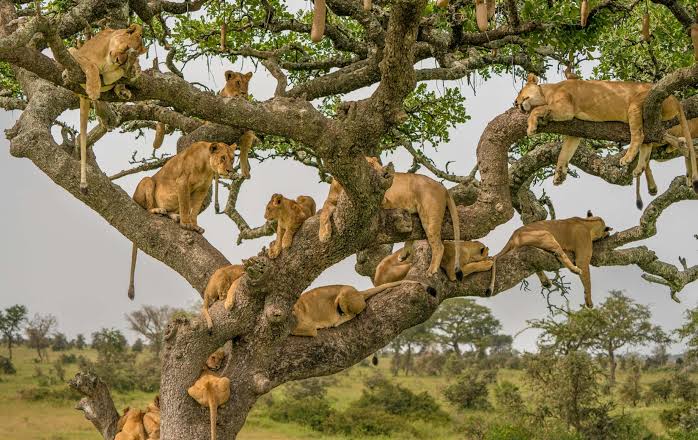
Luxury African Safaris in Tanzania
A luxury Tanzania safari approaches all of this at a different pace and with a different quality of access from a standard tour. The distinction is not only in the physical comfort of the accommodation, though the best camps in Tanzania offer design and service that competes with any hotel in the world.
The distinction is in what the guide knows about the landscape they are working, in the ratio of vehicles to guests that determines how many people share a sighting, in the difference between being the tenth vehicle at a crossing and being the second, in the bush dinner set in the field after a long afternoon drive when nobody else is within sight and the light is dropping over the Serengeti plains.
Luxury in the bush is partly about thread count and partly about a guide who knows which cheetah coalition has been hunting the western boundary for the last three weeks.
Where to go for Luxury Tanzania Safaris
Serengeti National Park
The Serengeti National Park covers 14,750 square kilometres of savannah, woodland, kopje country, and riverine forest in northern Tanzania. The name comes from the Maasai word siringet, meaning endless plain, and the description holds when you stand on the open grassland of the central Seronera Valley and watch the horizon in every direction without any feature that is not grassland and sky.
Wildlife moves continuously across the park’s boundaries with the Ngorongoro Conservation Area and the Grumeti and Ikorongo reserves. The migration follows the same circuit every year, varying in timing based on rainfall patterns.
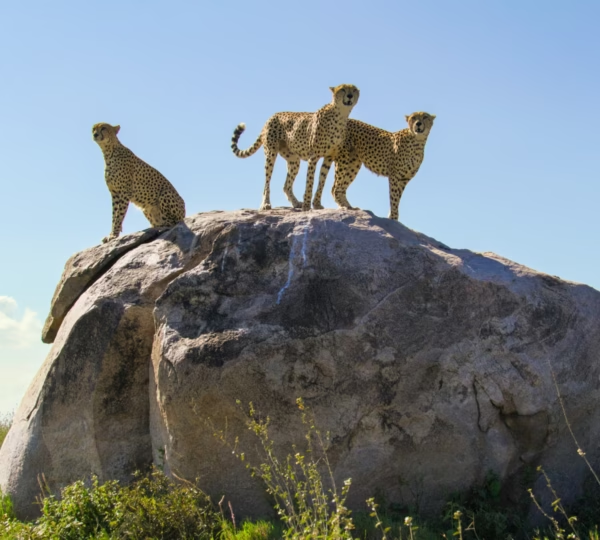
Cheetahs
The Northern Serengeti : Migration Season
The northern Serengeti, centred around Kogatende and the Lamai Wedge, is where the Great Migration spends July to October. The Mara River crossings happen along the northern boundary, and camps positioned here give the closest access to the crossing points. The best northern Serengeti luxury camps are seasonally operated and among the most sought-after accommodation in East Africa during these months, with bookings opening a year or more in advance.
When the crossing spectacle comes two million wildebeest pressing against the riverbank, the first animal committing, the herd following in a thundering mass, Nile crocodiles striking in the churning water it is exactly as extraordinary as the photographs suggest and more so for being immediate.
The Central Serengeti : Year-Round Wildlife
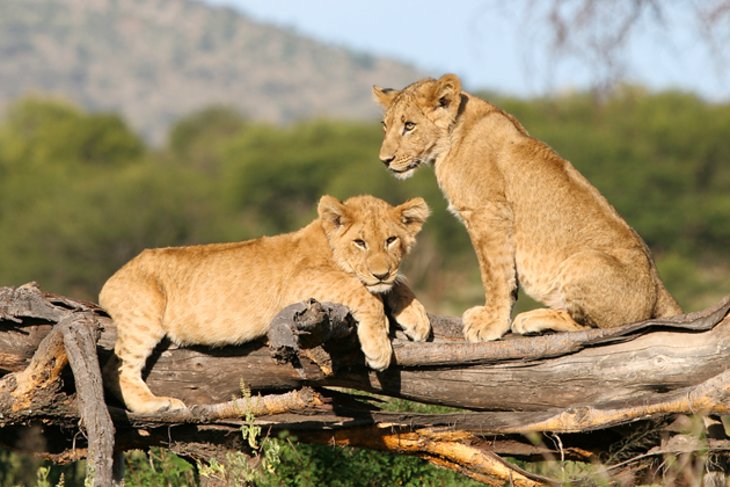
The Seronera Valley in the central Serengeti is consistently productive for wildlife year-round. It holds one of the densest resident lion populations in Africa, and the lions here are habituated enough to vehicles that close approaches are routine. Leopards use the riverine trees along the Seronera River. Cheetahs hunt the open grassland.
Elephants, spotted hyenas, wild dogs, jackals, and the full predator community of Tanzania is represented. For guests not visiting during migration, the central Serengeti is the most reliable year-round option.
The Southern Serengeti and Ndutu : Calving Season
Between December and March, the wildebeest herds move south into the Ndutu area on the southern Serengeti edge. This is the calving season: approximately 400,000 wildebeest calves are born in January and February in a concentrated reproductive event that overwhelms predators through sheer numbers.
The predator activity during calving is exceptional lions, cheetahs, and wild dogs hunt continuously, and kills are frequent, close, and visible at distances impossible at any other time of year. The Ndutu area requires seasonal camp positioning to access properly, and the best operators offer this as part of a tailored luxury itinerary.
The Western Corridor : Grumeti River Crossings
The western corridor is the migration route during May and June, when the herds move northwest toward the Grumeti River. The Grumeti crossings are less famous than the Mara River crossings but are in some respects a better experience: crossing sites are closer to the camps, the crocodile population is significant, and vehicle congestion is a fraction of the northern August crowds.
The private Grumeti Reserve, managed by Singita, limits visitor numbers through its conservation fee structure. The combination of the private reserve and the June crossing window gives an experience of the migration that many visitors prefer to the August spectacle.
Ngorongoro Crater
The Ngorongoro Crater is the world’s largest intact volcanic caldera, formed approximately three million years ago when a volcano estimated larger than Kilimanjaro erupted and collapsed. The caldera floor covers about 260 square kilometres and holds a permanently resident population of over 25,000 large mammals: lions, elephants, buffaloes, zebras, wildebeest, and the best opportunity in East Africa to see the endangered black rhinoceros in the wild. The current black rhino population numbers over 30 individuals and is the most reliably seen wild black rhino population in Tanzania.
A game drive on the Ngorongoro Crater floor is different from a Serengeti game drive. The enclosed geography keeps wildlife predictably concentrated in the wetland, grassland, and forest habitats on its floor.
The lion prides here run to thirty individuals or more, shaped by the genetics of an isolated population, giving sightings at a scale the Serengeti’s more diffuse prides cannot match.
The Ngorongoro also holds the Olduvai Gorge on its outer edge, where many of the world’s most significant early human fossil remains have been found, adding a deep-time dimension to the landscape that the other northern Tanzania parks do not have.
The most visually dramatic accommodation in Tanzania sits on the crater rim. The Ngorongoro Crater Lodge by andBeyond gives a view of the caldera floor 600 metres below from the veranda of every room. The design, with Maasai-inspired beadwork and detailed craftsmanship throughout, is unlike any other camp in East Africa.
Waking to mist in the crater at dawn, watching it lift to reveal the floor and the wildlife below, is one of Tanzania’s defining overnight experiences. The Highlands camp by Asilia Africa on the outer conservation area offers a completely different architectural character: dome-shaped glass-walled suites that merge interior and highland landscape in a modern design vocabulary.
Tarangire National Park
Tarangire National Park is 120 kilometres south of Arusha and covers 2,850 square kilometres of dry savannah, woodland, swamp, and the Tarangire River valley. During the dry season from June through October, Tarangire’s elephant population swells to one of the largest seasonal concentrations in Africa, sometimes producing herds of 200 animals coming to the river in a single afternoon.
The ancient baobab trees, some estimated to be over a thousand years old, give Tarangire a visual character unlike any other Tanzania park: a game drive through baobab country in the late afternoon light, with elephants moving through the dry grass and the trees catching the last sun, produces compositions specific to this landscape.
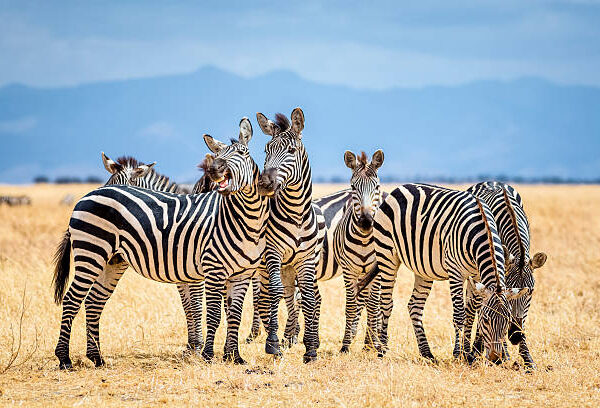
Group of zebras in Tarangire National Park
The Chem Chem private concession between Tarangire and Lake Manyara is the premium luxury option for this area. Two camps Little Chem Chem with six tents for the most intimate experience, and Chem Chem Lodge for larger parties operate on a private conservation area with full off-road and night drive access and walking safaris. The private concession status means the game drives here feel categorically different from the national park equivalent: your vehicle, your guide, your timing, your road.
Lake Manyara National Park
Lake Manyara National Park covers 325 square kilometres of groundwater forest, acacia woodland, open grassland, and shallow alkaline lake at the foot of the Rift Valley escarpment. It is famous for tree-climbing lions, a behaviour shared with Ishasha in Uganda, and for the view down the escarpment from the arrival road.
The groundwater forest at Manyara, fed by springs at the escarpment base, holds large populations of baboons, blue monkeys, and red colobus in ancient canopy trees. The park is typically one night on the northern circuit, bridging Tarangire and the Ngorongoro highlands, but the quality of the forest and the afternoon light on the flamingo-pink lake surface justify more time than most luxury itineraries allocate.
Planning a Luxury Tanzania Safari Around the Great Migration
The Great Migration is a year-round cycle rather than a fixed annual event. The roughly two million wildebeest move continuously around the Serengeti-Mara ecosystem following the seasonal rains, and the circuit takes approximately twelve months and repeats every year with variations driven by rainfall patterns.
For luxury safari planning, the most important question is which phase of the migration you want to witness, because each phase has specific geographic requirements that determine camp placement.
A luxury Tanzania itinerary that wants to witness the migration should be built backwards from the desired event rather than forwards from a fixed departure date. Decide which event is the priority calving plains in January, Grumeti crossings in June, or Mara River crossings in August and position camp choices and travel dates around that.
A skilled luxury Tanzania operator does this automatically. The itinerary produced should reflect migration intelligence rather than simply the most convenient combination of recognizable park names.
- January to February: Calving season in the Ndutu area and southern Serengeti. Exceptional predator activity. Best for wild dog, cheetah, and lion hunting encounters.
- May to June: Western corridor migration. Grumeti River crossings with significantly fewer tourists than the northern July peak.
- July to October: Northern Serengeti and Mara River crossings. Peak spectacle, peak visitor numbers. Stay in a northern Serengeti private camp rather than the core park for the best experience.
- November to December: Herds moving south. Lower prices, excellent resident wildlife, dramatic skies after the short rains.