Fascinating Facts About Mountain Gorillas
July 21, 2026
Packing List for Gorilla Trekking
July 21, 2026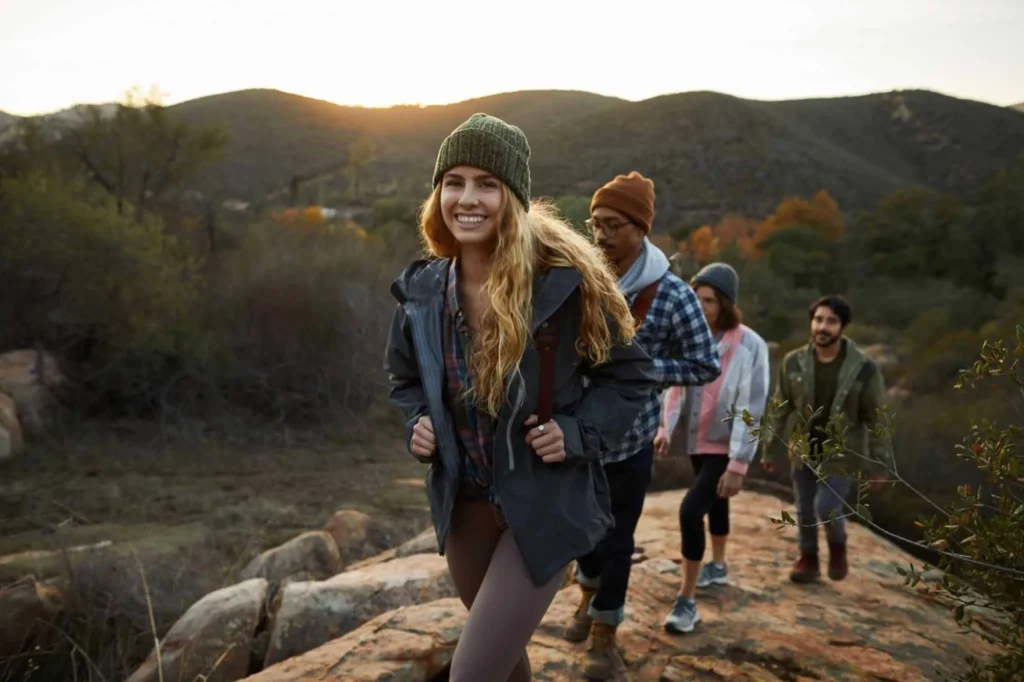
Packing List For a Uganda Walking Safari
Uganda safari destinations offer some of the best guided Uganda walking safaris, including Lake Mburo National Park , Kibale National Park , Bwindi National Park , Murchison Falls National Park, Semliki National Park , Queen Elizabeth National Park and many more.
Each of these places offer unique safari experiences. Below is a guide to the packing list of a Uganda wildlife safari, the best time as well as sample itineraries for Uganda safaris.
What to Wear
Long trousers are essential on all Uganda walking safaris, regardless of the temperature. The forest understory at Bwindi and Kibale has stinging nettles throughout, and the savannah grass at Lake Mburo and Kidepo carries seeds and burrs that collect on exposed legs and become irritating quickly.
Long-sleeved shirts are recommended for the same reasons and for sun protection at the higher altitudes of the western parks. Neutral colours, khaki, olive, brown, and grey, are appropriate for all wildlife walking, as bright colours and white are visible to animals at greater distances and tend to alter their behavior.
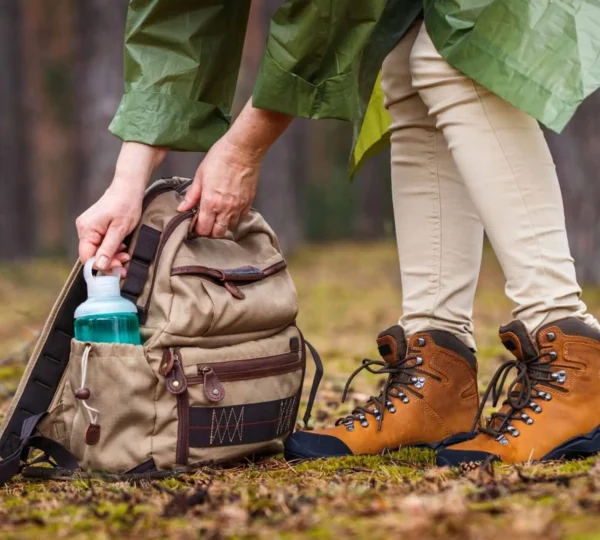
Footwear is the most important single gear decision for a Uganda walking safari. Waterproof hiking boots with ankle support are essential for the forest walks at Bwindi, Kibale, and Semuliki, where the terrain is steep, the soil is wet, and the roots on the forest floor create uneven footing throughout.
For the open savannah walks at Lake Mburo and Kidepo, firm-soled walking shoes or trail runners are adequate in the dry season, but boots are still the safer and more comfortable choice. Break in any new boots before the trip: a walking safari where your footwear is still stiff is a significantly worse experience than one where the boots have already softened to your feet.
What to Bring
- A daypack carrying your water (minimum 1.5 litres for a three-hour walk), snacks for longer walks, a rain jacket or poncho for the forest parks, and any camera equipment
- Binoculars: The forest-walking experience in particular is significantly enriched by optics. 8×42 magnification is the standard recommendation for wildlife walking. The difference between identifying a bird by shape in the canopy and identifying it by colour and marking detail is a binocular.
- Walking stick or trekking pole: useful on the steep sections of Bwindi forest trails and on the volcano hikes at Mgahinga. The UWA rangers at most parks have walking sticks available at the briefing point, but bringing your own if you have one is better.
- Light gardening gloves: invaluable on the Bwindi gorilla trek and on dense forest walks where pushing through vegetation is part of the route. They protect hands from nettles, thorns, and branches.
- A camera with sufficient ISO capability for forest light: the understorey light in Bwindi and Kibale is significantly lower than open savannah light and requires either a fast lens or a camera that handles high ISO cleanly.
Packing List For a Uganda Walking Safari
Best Time for Walking Safaris in Uganda
The dry season months, June through September and December through February, give the most reliable conditions for walking in Uganda. The savannah trails at Lake Mburo and Kidepo are firmer and less muddy, the forest paths at Bwindi and Kibale are drier and easier to navigate, and the vegetation is less dense in parts of the dry season, improving visibility. The morning walks in the dry season also benefit from cleaner, sharper light that produces better photographs and clearer views of the landscape.
The wet season months, March through May and October through November, make some forest trails challenging to navigate without slipping, and the heavier vegetation reduces visibility in open sections.
However, the forest is at its most photogenic in the wet season: deeper greens, mist in the canopy at dawn, waterfalls running at full volume, and a level of bird activity associated with breeding behavior that the dry season cannot match. For birding-focused walking safaris, the transition months of October to November and March to June are actually the most species-rich, and experienced birders often specifically choose these periods.
Why a Walking Safari Is Different From a Game Drive
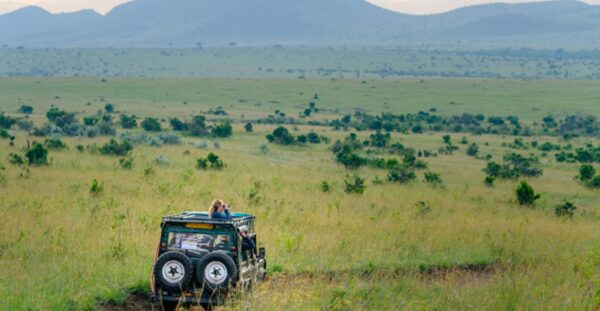
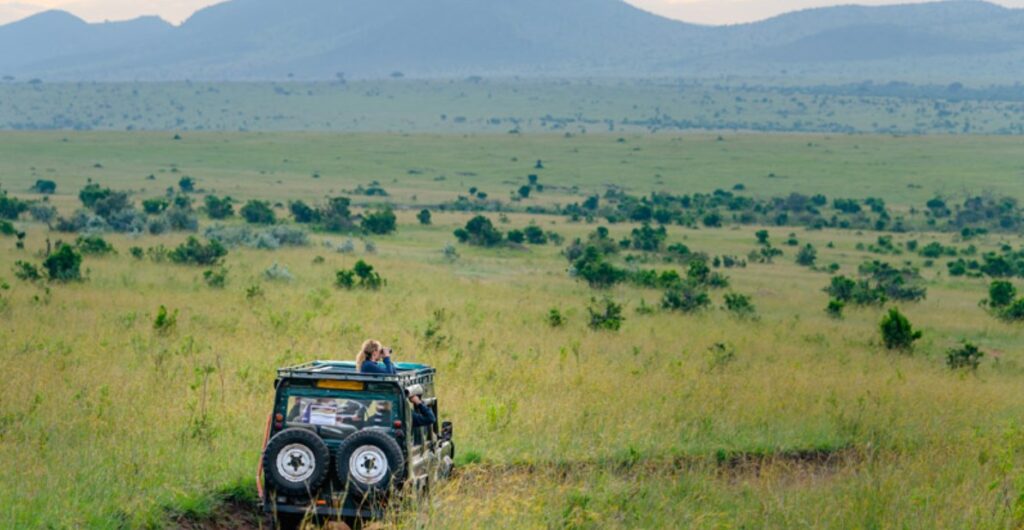
The game drive has one significant structural advantage: height. A vehicle puts you above the grass line, which increases your field of vision and your ability to spot animals at distance across open terrain.
For the large mammal sightings that most safari visitors prioritise, the elevated position of a pop-top safari vehicle on open savannah is genuinely useful. But it carries costs that most first-time safari visitors do not notice until they have tried the alternative.
A vehicle is loud. Even idling quietly at a sighting, the engine produces a constant sound frequency that penetrates the surrounding landscape. Animals in Africa have developed specific relationships with safari vehicles over generations, and many of them have effectively learned to ignore the vehicle as a non-threatening presence.
But you are not seeing their behaviour in the absence of vehicles. You are seeing behaviour in the presence of a known, familiar, non-threatening object. A walking group approaches from the opposite direction of habituation. Animals that ignore a vehicle may flee at 150 metres from a walking group. Or they may not, which is where the walking safari becomes specifically interesting: when an animal holds its position because it is not quite sure what you are.
The pace of walking allows a quality of observation that driving does not. On a game drive, the vehicle is always either moving between sightings or stationary at a specific sighting, and the choice between the two is constant.
On a walk, every step of the route is the observation. The ranger stops to examine the bark of a tree that has been rubbed by a hippo in the night. You follow the edge of a termite mound rather than driving around it.
You crouch at the edge of a waterhole to read the tracks in the mud. You listen to a bird you cannot see until the guide locates it in the canopy by call and then by movement and then by sight, in that order. The accumulated detail of a three-hour guided walk produces a very different understanding of the landscape than three hours in a vehicle, even if the headline animal list is identical.
Sample Walking Safari Itinerary for Uganda
8-Day Uganda Walking Safari
- Day 1: Arrive Entebbe, transfer to Kampala, or overnight near airport
- Day 2: Drive north with Ziwa Rhino Sanctuary stop—90-minute rhino tracking walk on foot
- Day 3: Murchison Falls — morning game drive, afternoon Nile boat cruise and Baker’s Point to falls top walk
- Day 4: Budongo Forest at Kaniyo Pabidi — Royal Mile birding walk, forest ecology walk
- Day 5: Drive to Fort Portal, afternoon crater lake walk above Kyaninga
- Day 6: Kibale Forest morning — guided forest walk and Bigodi Wetland Sanctuary afternoon
- Day 7: Queen Elizabeth National Park — Kazinga Channel boat cruise and guided nature walk near Mweya
- Day 8: Drive to Lake Mburo—evening walking safari (Kigambira loop) before return to Kampala
5-Day Forest Walking Focus
- Day 1: Arrive Entebbe, overnight near airport
- Day 2: Drive to Kibale Forest, afternoon guided forest walk
- Day 3: Morning chimpanzee trekking permit (if eligible), afternoon Bigodi Wetland walk
- Day 4: Drive to Bwindi Impenetrable Forest via Queen Elizabeth Ishasha sector
- Day 5: Bwindi nature walk (Ivy River trail or Mubwindi Swamp trail for birding focus), return to Kampala