Best Destinations to See Lions in East Africa
October 16, 2026
Kenya Cultural Tours
October 16, 2026
Reasons Why You Should Spend Your Family Vacation in Tanzania
Tanzania suits families with children roughly six years and older best, because that is the age when children can sit through a two- or three-hour game drive, follow what the guide is explaining and remember the experience afterwards. Families with younger children can still travel well here, but the itinerary needs more beach time, shorter drives and lodges that welcome small children.
Tanzania is less suitable for families who want everything inside one resort or for parents who are unwilling to adjust the pace. A safari runs on early mornings and wildlife timing, and the families who enjoy it most are those who treat the slower afternoons as part of the holiday rather than lost time.
| Family Type | How Well Tanzania Fits | Best Approach |
| Children under 5 | Possible with care | Short northern circuit trip plus Zanzibar, private vehicle, family lodges |
| Children 6 to 12 | Excellent | Northern circuit safari of 6 to 8 days with a beach extension |
| Teenagers | Excellent | Add walking, cultural visits, Kilimanjaro day hikes or a migration focus. |
| Multigenerational groups | Very good | Private vehicle, family houses or exclusive use camps, flexible pace |
| Families on tight budgets | Good with planning | Shoulder season, mid-range lodges, fewer parks covered properly |
With that framework in mind, here are the five reasons Tanzania stands out.
Wildlife That Children Can Actually See
Tanzania offers some of the most reliable and visible wildlife viewing in Africa, and visibility matters more with children than with adults. A child who waits forty minutes for a leopard that never appears loses interest quickly. A child who sees elephants, giraffes, zebras and lions on the first morning is hooked for the rest of the trip.
The Northern Circuit Delivers Density
The Ngorongoro Crater is the clearest example. The crater floor covers roughly 260 square kilometers and holds a resident population of wildebeest, zebra, buffalo, hippo, lion, hyena and one of the few remaining black rhino populations in northern Tanzania. Because the animals live inside the crater walls year round, sightings do not depend on migration timing. Children see a great deal in a single morning, and parents know the day is worth the early start.
Tarangire National Park adds something different. During the dry months from June to October, large elephant herds gather along the Tarangire River, and it is common to see family groups of thirty or more animals crossing in front of the vehicle. For children, watching baby elephants stay close to their mothers creates an emotional connection that no documentary manages.
The Serengeti brings scale. Between December and March, the southern plains around Ndutu host the wildebeest calving season, when hundreds of thousands of calves are born and predators follow closely. For older children and teenagers, this is a living biology lesson that sticks.
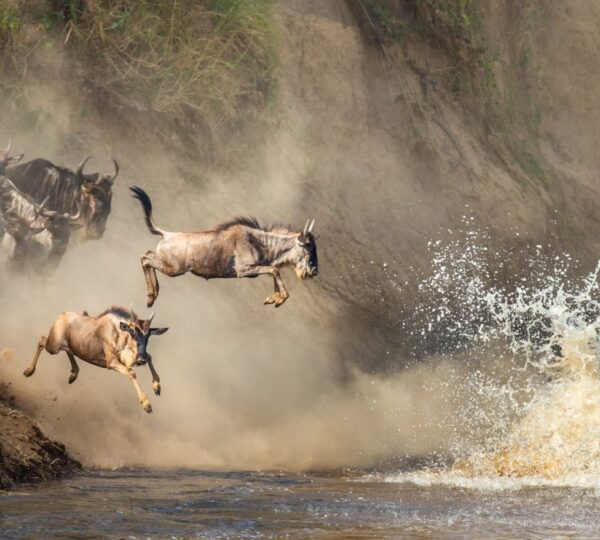
Wildebeest migration
Short Distances and Easy Combinations
One of the most underrated advantages of a Tanzania family safari is geography. The northern circuit parks sit close together, and the main gateway town of Arusha is served by Kilimanjaro International Airport with good international connections.
Practical Drive Times
| Route | Approximate Drive Time | Family Notes |
| Arusha to Tarangire | 2 to 2.5 hours | Easy first day, good lunch stop |
| Tarangire to Lake Manyara or Karatu | 1.5 to 2 hours | Highland lodges with cooler evenings |
| Karatu to Ngorongoro Crater rim | 30 to 45 minutes | Early start for the crater floor |
| Ngorongoro to central Serengeti | 3 to 4 hours | Longer drive, break it with a stop at Olduvai Gorge. |
| Serengeti to Arusha by light aircraft | About 1 hour | Saves a full day of driving on the way out |
These distances allow a sensible structure. A family can spend two nights in Tarangire, two in the Karatu highlands near Ngorongoro, and two or three in the Serengeti, then fly back to Arusha or onward to Zanzibar. No single day needs to feel exhausting if the itinerary is built properly.
The Light Aircraft Advantage
For families who want to reduce road time, scheduled light aircraft connect the Serengeti, Arusha and Zanzibar. These flights cost more than driving, but they turn a tiring eight-hour transfer into a one-hour flight. Families with younger children often drive in and fly out, which balances budget and comfort. Note that luggage on these flights is usually limited to around 15 kilograms per person in soft-sided bags, so packing needs planning.
The Safari and Beach Combination
Very few destinations combine a world-class safari with a tropical beach as smoothly as Tanzania does. Zanzibar lies about an hour by air from Arusha or the Serengeti, and its white sand beaches, warm Indian Ocean water and calm lagoons make it the natural second half of a family trip.
Why the Beach Matters With Children
A safari is mentally and physically busy. Early wakeups, long hours in a vehicle and new experiences every day can tire children quickly. A few days on the beach afterwards gives everyone time to process what they have seen and simply play. Parents often say the beach days were where the safari memories settled in.
Zanzibar also offers family activities beyond the sand. Stone Town, a UNESCO World Heritage Site, introduces children to Swahili history, spice markets and carved wooden doors. Spice farm tours let children smell and taste cloves, cinnamon and vanilla straight from the plant. Snorkelling trips to Mnemba Atoll show colorful reef fish in shallow water, and the Jozani Forest is home to the endemic Zanzibar red colobus monkey.
Choosing the Right Coast
| Zanzibar Area | Character | Best For |
| Nungwi and Kendwa (north) | Swimmable at most tides, livelier | Families with older children who want to swim any time |
| Paje and Jambiani (east) | Large tidal range, kitesurfing | Active families and teenagers |
| Matemwe and Kiwengwa (northeast) | Quieter, reef close by. | Families who want calm and snorkeling |
| Stone Town | History and culture | One or two nights, not a beach base |
The tidal difference is worth understanding. On the east coast the sea can retreat several hundred meters at low tide, which young children love for exploring rock pools but which frustrates families who want to swim whenever they like. The north coast generally offers deeper water close to shore.
Family Friendly Lodges and Flexible Travel Styles
A decade ago, many safari camps discouraged children. That has changed significantly. Tanzania now has a strong range of lodges and camps designed with families in mind, from large mid-range lodges with swimming pools to private houses that a family can book exclusively.
Matching Accommodation to Budget
| Budget Level | Typical Accommodation | What Families Get |
| Budget | Mid-range lodges outside parks, some camping | Pools, family rooms, longer drives to wildlife |
| Mid-range | Established lodges and permanent tented camps inside or near parks | Good location, family tents, reliable service |
| Luxury | Small camps, family suites, exclusive use houses | Private vehicle and guide, tailored activities, more space |
The key trade-off is location versus comfort. Lodges outside park boundaries often have better family facilities at lower prices, but they add drive time each morning. Camps deep inside the Serengeti place you near wildlife at dawn, but some have minimum age rules or no fencing, which matters with small children.
A Private Vehicle Is Worth It
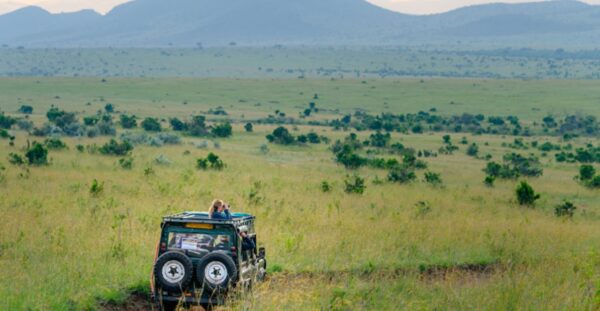
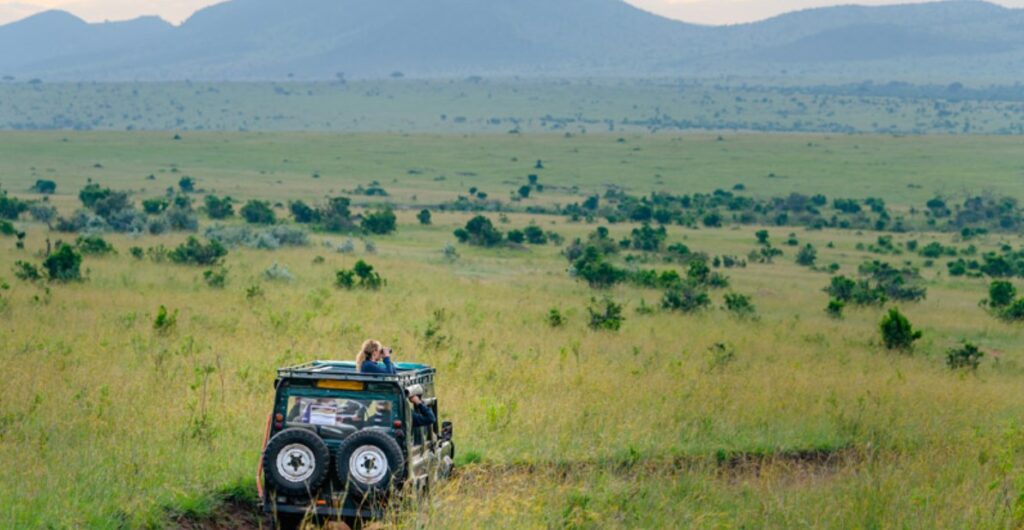
For families, a private safari vehicle is one of the best investments in the trip. It allows you to return to camp when a child is tired, stop for a toilet break without disrupting other guests, and spend extra time at sightings your children find fascinating. Shared group safaris are cheaper but rarely suit families with children under twelve.
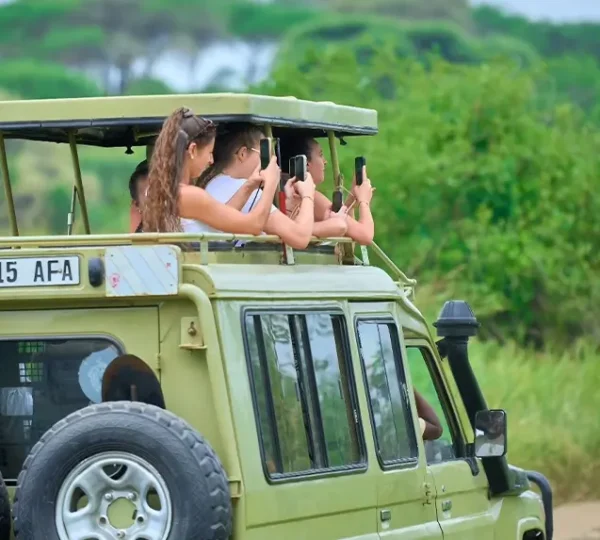
Tanzania Game Drives
Learning That Lasts Beyond the Holiday
A family vacation in Tanzania teaches children things that classrooms cannot. Guides explain animal behavior, ecosystems and conservation in a way that makes sense on the spot. Children learn why vultures matter, how elephants shape the landscape and why the wildebeest migration follows the rain.
Cultural Encounters
Tanzania is home to more than 120 ethnic groups, and respectful cultural visits can add depth to the trip. Maasai villages near the Ngorongoro Conservation Area and the Serengeti offer insight into pastoral life, traditional homes and the importance of cattle. Near Lake Eyasi, families can meet Hadzabe hunter-gatherers and Datoga blacksmiths, an experience best suited to teenagers who can appreciate the context. In Karatu, coffee farm tours show the journey from bean to cup.
When Is the Best Time for a Family Safari in Tanzania?
School holidays often decide timing, so it helps to understand what each period offers.
| Period | Weather | Wildlife Highlights | Family Considerations |
| June to October | Dry, cool mornings | Excellent general viewing, migration in the northern Serengeti from July | Peak prices align with summer school holidays. |
| Late December to February | Warm, short dry spell | Calving season in southern Serengeti | Christmas is busy and priced at a premium. |
| March to May | Long rains, heaviest in April | Green landscapes, fewer visitors | Some camps close, there are lower rates, and roads can be muddy. |
| November to early December | Short rains | Herds moving south, birdlife | Good value; rain usually falls in short bursts. |
For families tied to European or North American summer holidays, July and August deliver excellent viewing and pleasant temperatures. For those with flexibility, late January and February combine calving season with Zanzibar at its sunniest. Easter holidays fall in the long rains, which brings lower prices but some practical limits.
How Much Does a Family Vacation in Tanzania Cost?
Costs vary with season, accommodation and how much you fly, but these ranges give a realistic starting point per person per night on safari, including park fees, vehicle, guide, meals and accommodation.
| Style | Approximate Cost Per Person Per Night | Notes |
| Budget | US$250 to US$400 | Lodges outside parks, careful season choice |
| Mid range | US$450 to US$750 | Well located lodges and tented camps |
| Luxury | US$900 to US$2,000+ | Small camps, private guiding, fly in sections |