Kenya vs Tanzania
July 21, 2026
Best Time to Visit Kenya for a Safari
July 21, 2026
Ultimate Guide to an African Safari in Kenya
Kenya is where most people’s idea of an African safari comes from. The wildlife in Kenya’s national parks and conservancies is abundant and accessible, the guiding infrastructure is the most developed in East Africa, and the Masai Mara delivers the kind of wildlife viewing that other destinations spend their marketing budgets trying to approximate.
The Great Migration changes everything during the months it happens. Between July and October, approximately 1.5 million wildebeest, 400,000 zebras, and 300,000 Thomson’s gazelles move north out of Tanzania’s Serengeti into Kenya’s Masai Mara, following the rains and the grass.
The Mara River crossings, where the herds plunge into crocodile-filled water and lions wait on the opposite bank, are the most dramatic wildlife spectacle on the planet. They are also not the only reason to visit Kenya.
Amboseli gives elephant herds against the white dome of Kilimanjaro. Samburu holds species found nowhere else in Kenya: the reticulated giraffe, the Grevy’s zebra, the gerenuk, and the Beisa oryx.
Ol Pejeta holds the largest black rhino population in East Africa. And a Kenya safari without understanding the Maasai people and the conservancy model that has kept the land wild is a safari that has missed a dimension as significant as the animals.
This guide covers Kenya’s main safari destinations, what the Great Migration is and how to plan around it, the fee structure, accommodation options to mention but a few.
Masai Mara National Reserve
The Masai Mara National Reserve covers approximately 1,510 square kilometres of open savannah, acacia woodland, and riverine forest in southwestern Kenya, directly north of Tanzania’s Serengeti National Park. There is no fence between the Mara and the Serengeti. The ecosystem they share is continuous, and the wildlife moves freely between the two countries following the same seasonal grass cycle it has followed for thousands of years.
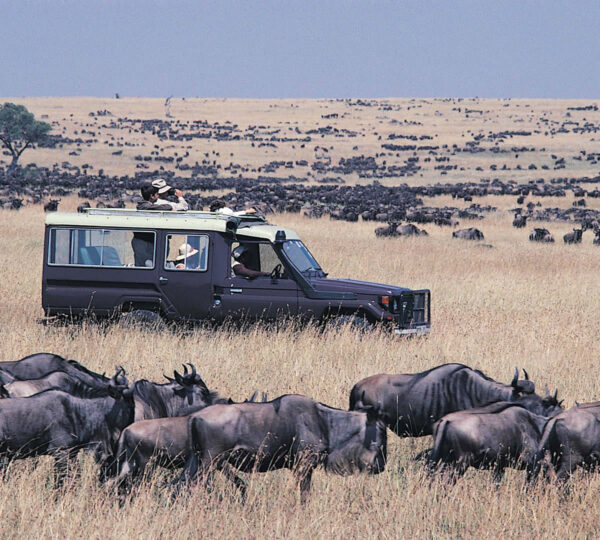
Maasai Mara Reserve
The Mara River bisects the reserve, and the crossings where the wildebeest plunge through crocodile-filled water from July to October are concentrated along several points that experienced guides know and position their vehicles near in advance.
The reserve is managed by Narok County Government, with the Mara Triangle, the western section, managed separately by the Mara Conservancy, a non-profit organisation. The Mara Triangle tends to be less crowded than the main reserve and is better maintained. Many experienced visitors specifically request camps or lodges that access the Mara Triangle.
The Mara Conservancies
Surrounding the core reserve are fourteen community conservancies, of which the most significant for tourism are Olare Motorogi, Naboisho, Mara North, Lemek, Ol Kinyei, and Offbeat Mara.
These conservancies are owned by Maasai families who receive lease payments from the safari camps operating on their land, providing a direct financial incentive to maintain the land as wildlife habitat rather than converting it to agriculture. The fees for the conservancies are typically included in the nightly rate of the camps within them.
The key advantages of the conservancies over the reserve: off-road driving is permitted, night game drives are allowed, vehicle limits at sightings are managed by the conservancy companies, and walking safaris with armed guides are available.
A lion kill in a conservancy can be watched by two vehicles for an hour while the equivalent sighting in the reserve might attract thirty. This single difference shapes the quality of the experience more than any other single variable in Kenya safari planning.
The Great Migration — What It Is and How to See It
The Great Migration is not a single event that happens on a fixed date. It is a year-round circular movement of approximately 1.5 million wildebeest, 400,000 zebras, and 300,000 Thomson’s gazelles around the Serengeti-Mara ecosystem. The herds follow the rains and the grass, moving north from Tanzania into Kenya between July and October and returning south in November and December.
The Mara River crossings, the most dramatic moments of the migration, happen when the herds arrive at the river and must decide to cross. They do not cross on a schedule. A crossing can happen four times in a single morning or not at all for three days.
The Mara River crossing season runs from approximately late July through October, with August and September typically producing the highest frequency of crossings. July and early October give similar crossings with fewer vehicles.
The vehicle congestion at crossing points in August, when news of a crossing spreads across camp radios and triggers a convoy of twenty or thirty vehicles converging on the same bank, is the most commonly cited problem with high-season Mara visits. Staying in a conservancy and having a guide who focuses on the conservancy’s river access points reduces this significantly.
Outside the Great Migration months, the Masai Mara is not without wildlife. Resident lions, leopards, cheetahs, elephants, buffaloes, topi, eland, Grant’s gazelle, and impala are present year-round. The Mara in January and February is considered by some experienced operators to offer the finest predator viewing of the year: wildebeest are calving in Tanzania’s Serengeti, driving exceptional hunting behaviour by the Mara’s big cats, and vehicle numbers are a fraction of peak season.
Masai Mara Entry Fees
As of July 2024, adult non-resident entry fees are USD 200 per adult per 12-hour period during high season (July through October) and USD 100 during low season (November through June). Children aged 9 to 17 pay USD 50. Children under 8 enter free. Conservancy fees are typically included in the nightly camp rate. Always confirm current rates with your operator before travel, as these fees are reviewed periodically.
Amboseli National Park
Amboseli National Park covers 392 square kilometres of open dry savannah and seasonal swamps in southern Kenya, directly north of Africa’s highest peak. The specific draw is the combination of large elephant herds and the view of Kilimanjaro rising 5,895 metres above the surrounding plains, visible most clearly in the early morning before clouds build on the mountain’s upper slopes.
Amboseli’s elephant population is one of the most studied in the world: the Amboseli Elephant Research Project, founded by Dr. Cynthia Moss in 1972, is the longest-running wild elephant study on earth, and the individual elephants are known by name, family group, and life history to the researchers who have monitored them for over five decades.
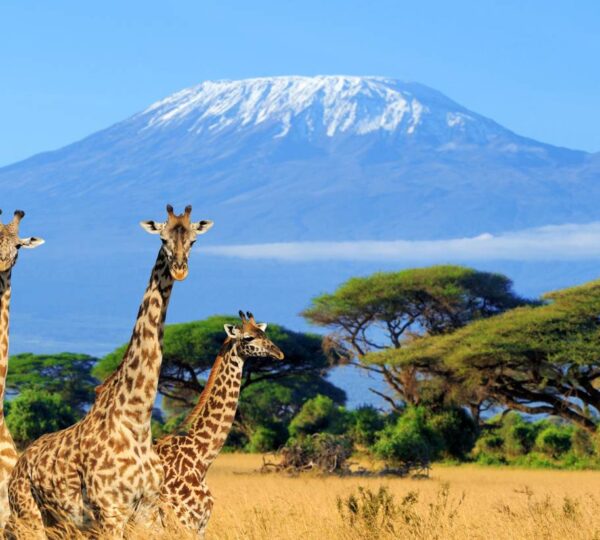
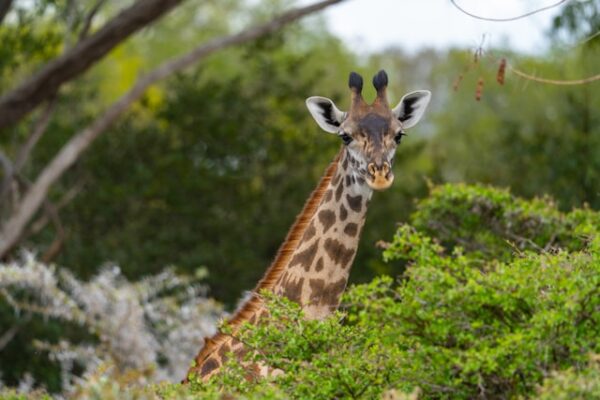
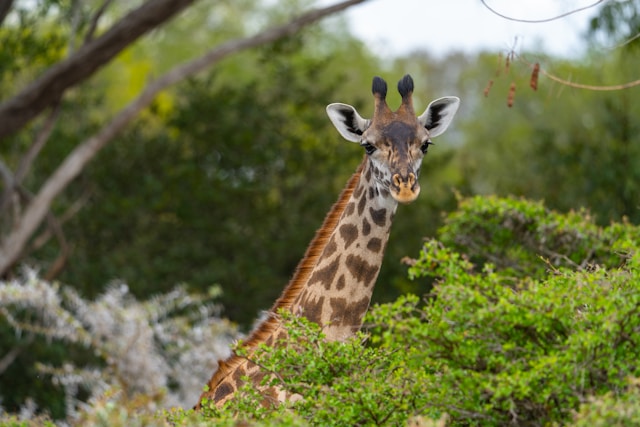
Giraffes in Amboseli
Lions, cheetahs, buffaloes, zebras, wildebeest, and large numbers of wading birds are present in and around the swamp habitats. The Observation Hill viewpoint in the centre of the park gives a panoramic view over the swamp systems particularly striking in the early morning when the mountain is clear. Amboseli is approximately four hours from Nairobi by road or thirty minutes by bush flight from Wilson Airport.
Samburu National Reserve
Samburu National Reserve sits in north-central Kenya at the foot of the Matthews Range, 325 kilometres north of Nairobi in the semi-arid landscape of Isiolo County. It covers 165 square kilometres of arid bush along the Ewaso Ng’iro River. The riverine vegetation concentrates wildlife against the dry bush: elephants use the river daily, leopards are resident and frequently seen, lions hunt the open areas between the forest and the dry plains.
Samburu is where Kenya’s safari circuit gains its most distinctive regional character. The reserve holds four species not found in southern Kenya: the reticulated giraffe (large polygonal coat pattern), the Grevy’s zebra (taller, more narrowly striped, considerably rarer than Burchell’s zebra), the gerenuk (long-necked antelope that stands on its hind legs to browse above the reach of other antelope), and the Beisa oryx. These four are sometimes called the Samburu Special Five.
A morning drive along the Ewaso Ng’iro gives a high probability of all four. Visiting Samburu alongside the Masai Mara in a single circuit adds a category of wildlife and landscape that the southern parks cannot provide.
Lake Nakuru National Park
Lake Nakuru National Park encircles Lake Nakuru in Kenya’s Rift Valley, 160 kilometres northwest of Nairobi. The park covers 188 square kilometres and is fenced, which keeps the rhino population contained and gives a significantly higher probability of rhino sightings than the unfenced parks.
Both black and white rhinos are present, alongside lions, leopards, buffaloes, Rothschild’s giraffes, waterbucks, zebras, and a rich waterbird community.
Lake Nakuru’s alkaline water hosts flamingo populations that have fluctuated in recent years with changes in water levels. At peak concentrations the lake shore turns pink; current populations are lower but present. The rest of the park’s wildlife more than justifies the visit.
Ol Pejeta Conservancy
Ol Pejeta Conservancy covers 360 square kilometres in Laikipia County north of Nanyuki. It holds the largest black rhino population in East Africa, approximately 110 individuals, and is the home of the last two northern white rhinos in the world: Najin and Fatu, a mother and daughter under 24-hour armed guard.
Visits to the northern white rhinos are possible from a designated viewing area and are a moving encounter with a species that is functionally extinct in the wild.
Beyond the rhinos, Ol Pejeta holds lions, leopards, cheetahs, elephants, buffaloes, zebras, and a diverse antelope population. The chimpanzee sanctuary at Ol Pejeta, operated with the Jane Goodall Institute, holds orphaned chimpanzees rescued from illegal trade. The conservancy is also the only place in Kenya where you can track a black rhino on foot with an armed ranger, producing a very different encounter from vehicle-based viewing.
Lake Naivasha and Hell’s Gate
Lake Naivasha, 80 kilometres northwest of Nairobi on the Rift Valley floor, is a freshwater lake with accessible hippo encounters on morning boat trips. Crescent Island is a private sanctuary where you can walk among zebras, giraffes, wildebeest, and antelope without a vehicle.
Hell’s Gate National Park adjacent to the lake is one of the very few national parks in Africa where visitors can cycle or walk through the game tracks.
The park’s volcanic gorge landscape, with towering rock columns and geothermal activity, makes it one of Kenya’s most unusual park experiences. The cycling option through the narrow gorge, where steam vents emerge from the rock face, is particularly popular with families.