
Where to Go for Birding Safaris in Uganda?
July 22, 2026
Where to Go for Birding Safaris in Rwanda
July 22, 2026
Where to Go for Birding Safaris in Tanzania?
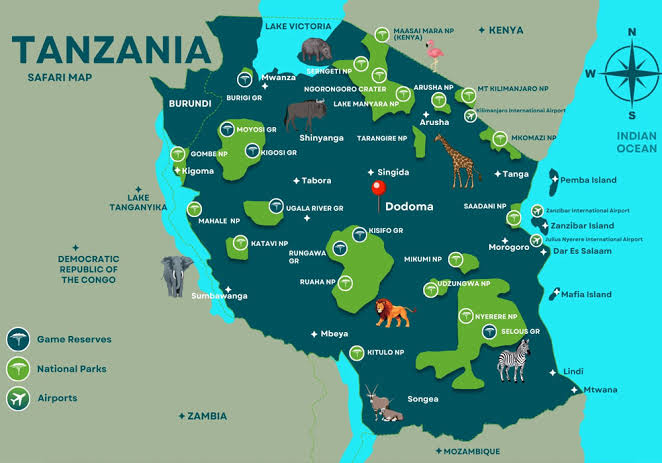
Where to Go for Birding Safaris in Tanzania? Tanzania, East Africa’s largest safari destination, offers a birding destination of quite extraordinary scale and diversity, with well over a thousand recorded bird species reflecting the country’s remarkable range of habitats, from the endless grasslands of the Serengeti and the flamingo-fringed soda lakes of the Rift Valley to the ancient, biologically unique forests of the Eastern Arc Mountains and the vast wilderness of its southern game reserves.
For birders, Tanzania delivers not only numbers but also a collection of highly localised endemic species found nowhere else on earth, alongside some of the most spectacular and accessible classic safari birding anywhere on the African continent.
What makes Tanzania particularly rewarding for visiting birders is the way its renowned Big Five and Great Migration safari circuit doubles as outstanding birding territory, meaning that birders need not choose between classic mammal focused safari destinations and dedicated birding sites, since parks such as the Serengeti, Ngorongoro Crater, and Tarangire deliver both in abundance.
Layered on top of this is the entirely separate and remarkable birding world of the Eastern Arc Mountains, a chain of ancient forested ranges harboring some of Africa’s rarest and most localised bird species.
Birding in Tanzania
Why Tanzania Is an Exceptional Birding Destination
Tanzania’s outstanding birding credentials rest on its sheer size and habitat diversity, encompassing everything from open savannah and alkaline soda lakes to montane cloud forest and coastal woodland, all within a single country of considerable geographical range.
Understanding these underlying factors helps explain Tanzania’s growing reputation among serious international birding tour operators.
- Over 1,100 recorded bird species, one of the highest national totals anywhere in Africa, reflecting Tanzania’s exceptional habitat range.
- The Eastern Arc Mountains, a globally significant centre of endemism harbouring numerous bird species found nowhere else on earth.
- World famous Rift Valley soda lakes hosting spectacular concentrations of lesser and greater flamingos alongside numerous further waterbird species.
- The ability to combine outstanding birding with the Great Migration and classic Big Five game viewing across the same northern safari parks.
- Vast, less visited southern reserves offering excellent birding away from the crowds of the northern circuit.
- A well established safari and birding infrastructure developed over decades of international tourism.
Serengeti National Park:
The Serengeti’s vast, open plains, celebrated worldwide for the Great Migration and exceptional predator viewing, also support an impressive checklist of savannah associated bird species, making birding an entirely natural and rewarding addition to any classic Serengeti game drive.
Raptors are particularly well represented here, with secretary birds stalking the grasslands on their long legs, various vultures gathering at kills, and numerous eagle species patrolling the skies above the endless plains.
The Serengeti’s varied habitats, including riverine woodland along its watercourses, kopjes, and open grassland, support further species including the striking lilac breasted roller, Tanzania’s unofficial avian mascot and one of Africa’s most photographed birds, alongside bustards, larks, and numerous further grassland specialists.
Combining dedicated birding observation with the excitement of the Great Migration and predator sightings makes the Serengeti a uniquely rewarding destination for birders who also appreciate classic Big Five safari viewing.
Ngorongoro Crater
The Ngorongoro Crater and the wider network of Rift Valley soda lakes scattered across northern Tanzania, including Lake Manyara and Lake Natron, offer some of the most visually spectacular birding anywhere on the continent, centred on the extraordinary phenomenon of vast flamingo flocks gathering in their hundreds of thousands on these alkaline waters, painting the shoreline a vivid, shimmering pink.
Lake Manyara National Park in particular combines excellent flamingo and waterbird viewing with forest and woodland birding along its shoreline and the surrounding groundwater forest, while Lake Natron, considerably more remote and rarely visited, serves as one of the primary breeding grounds for East Africa’s lesser flamingo population, offering a genuinely spectacular, if logistically demanding, birding destination for dedicated visitors. The Ngorongoro Crater floor itself adds further excellent birding to its renowned Big Five game viewing, with numerous waterbirds gathering around its central soda lake alongside the crater’s classic savannah species.
Tarangire National Park:
Tarangire National Park, celebrated for its enormous elephant herds and iconic baobab studded landscape, also ranks among Tanzania’s finest birding destinations, particularly renowned for its exceptional raptor diversity, with numerous eagle, vulture, and hawk species regularly observed patrolling the park’s woodland and riverine habitats along the Tarangire River.
The park’s swamps and seasonal wetlands attract further waterbird species during the wetter months, while its dry season concentrations of wildlife around the river also draw birders seeking classic dry country species including hornbills, bee-eaters, and the striking yellow collared lovebird, a species with a relatively restricted range centred on this part of northern Tanzania.
Tarangire’s combination of dramatic baobab scenery and exceptional raptor birding makes it an essential stop on any comprehensive Tanzanian birding itinerary.
The Eastern Arc Mountains:
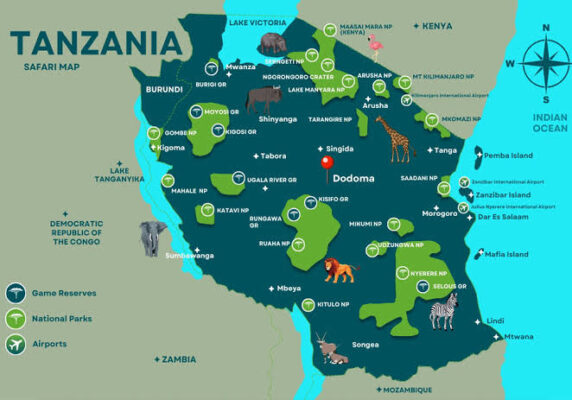
For dedicated birders specifically seeking endemic species, the ancient, isolated forests of the Eastern Arc Mountains, a chain of ranges including the Usambara, Uluguru, and Udzungwa Mountains, represent one of the most important and rewarding birding destinations anywhere in Africa, so significant for endemism that the region has occasionally been described as an African equivalent of the Galapagos Islands.
These ancient forests, isolated for millions of years, have allowed remarkable rates of species diversification found in few other locations on the continent.
Udzungwa Mountains National Park, the most accessible and visited of these ranges, harbours numerous endemic and near endemic species found nowhere else on earth, alongside a resident population of forest primates that add further interest to a visit primarily focused on birding.
The more remote Usambara and Uluguru Mountains offer further concentrations of Eastern Arc endemics for the most dedicated birders willing to venture beyond Tanzania’s standard safari circuit into these lesser visited, biologically extraordinary highland forests.
Nyerere National Park and the Southern Circuit
Tanzania’s vast southern reserves, including Nyerere National Park, formerly part of the Selous Game Reserve, and Ruaha National Park, offer excellent and considerably less crowded birding compared with the busier northern safari circuit, their extensive woodland, riverine, and wetland habitats supporting a rich diversity of species observed amid genuinely wild, uncrowded surroundings.
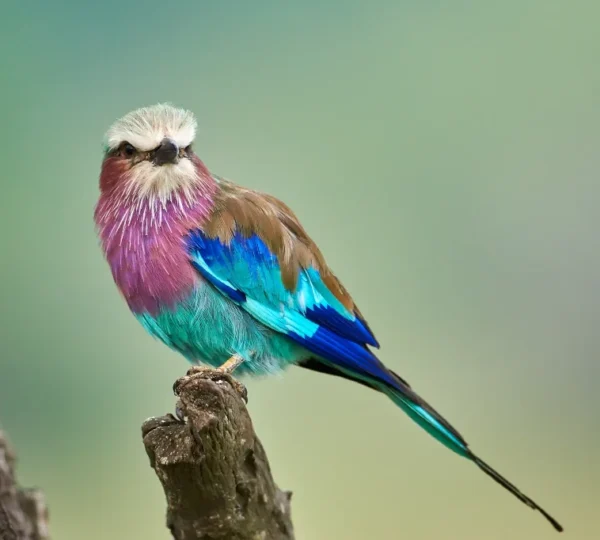
Tanzania birding safaris
Boat safaris along the Rufiji River within Nyerere National Park offer particularly rewarding birding, bringing visitors close to numerous waterbird species, fish eagles, and kingfishers along the riverbanks, while Ruaha’s rugged, baobab dotted landscape supports further dry country specialists and an impressive raptor population. For birders seeking Tanzania’s classic savannah and woodland species away from the more visited northern parks, the southern circuit offers an excellent and increasingly popular alternative.
Key Tanzanian Birding Sites at a Glance
| Site | Signature Species or Habitat |
| Serengeti National Park | Raptors, lilac breasted roller, grassland species |
| Ngorongoro Crater and Rift lakes | Flamingo spectacles, waterbirds |
| Tarangire National Park | Exceptional raptor diversity, yellow collared lovebird |
| Eastern Arc Mountains | Numerous endemics, Udzungwa, Usambara, Uluguru |
| Nyerere National Park (Selous) | Riverine species, Rufiji River boat safaris |
| Ruaha National Park | Dry country specialists, raptors |
Best Time for Birding in Tanzania
Birding is rewarding across Tanzania throughout the year given its predominantly resident species, but the period from November to April offers particularly outstanding birding as it coincides with the arrival of Palearctic migrants escaping the northern winter, substantially boosting species counts at the Rift Valley soda lakes and across the northern savannah parks during this period.
This period also overlaps usefully with the dramatic wildebeest calving season in the southern Serengeti.
The dry seasons, from June to October and briefly around January to February, offer practical advantages including easier access to remote reserves and generally more comfortable travelling conditions, while the wetter months bring lush landscapes and excellent conditions for the Eastern Arc Mountains, where forest birding remains productive essentially year round given the relative climatic stability of these ancient montane forests.
Combining Birding With Classic Safari and the Migration
One of Tanzania’s greatest strengths as a birding destination is that its finest birding sites are, in most cases, the very same parks celebrated for classic Big Five game viewing and the Great Migration, meaning birders need not sacrifice mammal focused safari experiences to pursue an outstanding bird list.
A well-planned itinerary can weave together Serengeti and Ngorongoro Crater for both migration viewing and exceptional birding, before extending south to the more specialised Eastern Arc Mountains or southern reserves for dedicated endemic and off the beaten track birding.
For birders with more limited time, focusing on the northern circuit alone still delivers an outstanding, wide ranging bird list alongside classic safari highlights, while those with two weeks or more can extend their itinerary to include the considerably more specialised Eastern Arc endemics or the wilder, less visited southern circuit, delivering a truly comprehensive Tanzanian birding experience.